
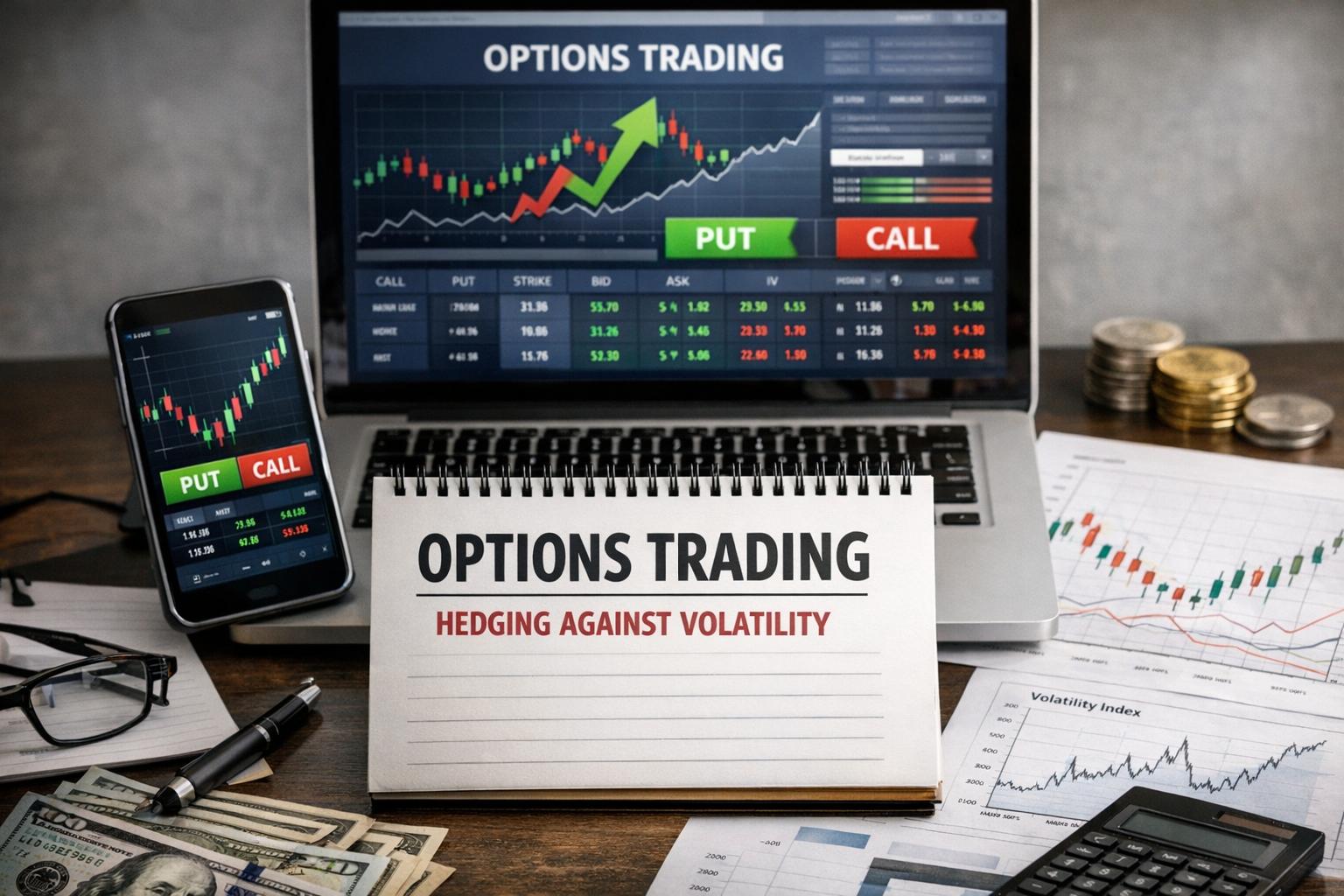
Understanding Options Trading for Hedging
Options trading isn’t just a playground for people who enjoy math homework after dinner. When used correctly, it can help investors reduce the damage done by nasty surprises in the market—like sudden sell-offs, unexpected volatility spikes, or sharp trend reversals. The basic goal of hedging is straightforward: you accept paying a price (often in the form of an option premium) to reduce the risk you can’t comfortably live with.
Options themselves are contracts. They give the holder the right, but not the obligation, to buy or sell an underlying asset at a predetermined price before (or sometimes on) a specified date. That “right, not the obligation” piece matters a lot: it allows investors to structure positions where their potential losses are more manageable, while their upside can still be preserved depending on the strategy.
How hedging with options fits into investor reality
In real portfolios, hedging usually shows up in situations like these:
- You own shares of a stock (or a basket) and worry about a downturn around an event—earnings, a regulatory decision, macro data, geopolitical headlines.
- You’re not necessarily bearish long term, but you’d sleep better if your downside were capped for a few months.
- You want income, but you don’t want to ignore risk; you’d rather collect premiums while setting boundaries.
Options can help with all of that, but only if you understand the ingredients and the trade-offs. The market loves a plan that’s too vague. Your strategy should be specific enough to hold up when prices start moving fast—because they will.
Key Components of Options
Before you hedge anything, you need to be clear about what the option contract actually contains. Most confusion starts here: people treat options like a single product instead of a bundle of assumptions. The bundle has parts, and each part affects pricing and payoff.
Options Pricing: why the premium isn’t “just a fee”
The premium is the price you pay (or receive, depending on whether you buy or sell the option). People often underestimate how much goes into that price. A rough, practical view is:
- Intrinsic value: If the option is already “in the money,” it has value even without any future movement.
- Time value: Even if it’s not in the money, the option may still have value because there’s time for the underlying to move into profitability before expiration.
- Volatility expectations: Markets price the possibility of movement. Higher expected volatility generally increases option premiums.
- Interest rates and dividends: These can slightly affect pricing, especially for longer time frames.
For hedging, the key takeaway is that you aren’t just buying protection—you’re buying protection under specific assumptions about time and volatility. If those assumptions change, your hedge may cost more (or perform differently) than you expected.
Types of Options
Options can basically be categorized into two main types, each serving distinct purposes in investment strategies.
- Call Options: Call options provide the holder with the right to acquire the underlying asset at the predetermined strike price. This type of option benefits investors expecting an increase in the asset’s value.
- Put Options: Conversely, put options grant the right to sell the underlying asset at the strike price. These are particularly advantageous for those anticipating a decrease in asset value, offering a method to hedge against potential downturns.
Understanding moneyness: why “strike vs price” is only half the story
When people talk about whether an option is “in the money” or “out of the money,” they usually only compare the strike price to the current price of the underlying. That’s necessary information, but not sufficient. For hedging, what matters is how likely the underlying is to move enough, before expiration, to make the hedge useful.
For example:
- A put option slightly out of the money may still protect you if the stock drops enough to bring the option into profitability.
- A put option deep in the money may protect well but cost more because it has more intrinsic value.
- An option far out in time (“long-dated”) may be pricier, but it can hedge a longer risk window.
This is why two hedges with the same underlying can feel totally different in practice.
Hedging Against Volatility
One of the prominent uses of options in an investment strategy is their ability to hedge against market volatility. This involves using options to counterbalance potential losses due to the inherent fluctuations in market prices, which can be especially acute in volatile or uncertain market conditions.
Volatility doesn’t just mean the stock goes down. Volatility can also mean:
- Prices swing rapidly, making your entry/exit points less reliable.
- The market reprices risk quickly, sometimes ignoring fundamentals short term.
- Correlations shift—stocks that usually move together stop behaving nicely.
Options react to these changes. That’s why hedging with options can feel like buying insurance: it won’t stop the storm, but it can reduce the damage.
Protective Put Strategy
Purchasing put options as a protective measure against portfolio devaluation is a common approach among investors. Known as a protective put, this strategy involves holding a long position in the underlying asset while simultaneously buying a put option for the same asset.
For example, if an investor holds a stock position that they fear might drop in value, acquiring a put option ensures that they can sell the stock at the strike price, despite any downturns below this level. This effectively caps potential losses, as the gains from the put option can offset declines in the stock’s price.
What payoff looks like in plain English
If the stock rises, your shares gain value. The put option you bought will likely lose value over time (because it’s not needed), but your overall position still benefits from the stock’s upward move. If the stock drops, the put helps offset losses by allowing you to sell at the strike price.
Most investors end up using protective puts when their time horizon for risk is clear—like a planned holding period around a known catalyst. If the risk window ends and you no longer need insurance, you can close the put before expiration instead of waiting and watching it bleed time value.
Choosing strike and expiration for protective puts
This is where hedging becomes more than “buy a put and hope.” Consider:
- Strike price selection: Higher strike prices generally provide stronger protection but cost more.
- Expiration selection: Shorter-term puts cost less but provide protection only for a narrower window. Longer-term puts cost more due to more time value.
- Probability of the move: Options markets price volatility. If implied volatility is high, you may pay a higher premium for protection.
A practical approach is to match the hedge to the period you actually worry about. If you’re worried about the next month, don’t buy a hedge meant for six months unless the extra cost feels justified.
Covered Call Strategy
A covered call is another strategy that allows investors to generate additional income from their investments while providing a hedge. This involves owning the underlying stock and selling call options at a strike price above the current market price.
Although this caps potential upside gains if the stock’s price surges above the strike price since the investor would be obligated to sell, it allows them to receive premium income from the sale of the call options. This premium can serve as a buffer against downside risk, providing a measure of income that can absorb some losses or fluctuate below the strike price.
Why covered calls “hedge,” but not like protective puts
Covered calls can reduce net losses because you collect premium. If the stock falls or moves sideways, you likely keep that premium. If the stock rallies sharply, though, you may be forced to sell shares at a price that is below where the market could go next.
So, this isn’t a strict downside insurance policy. It’s more like negotiating a deal with the market: “I’ll sell you upside above a certain price, and in return I’ll take some premium today.” For many income-focused investors, that works well when their goal is steady returns with acceptable trade-offs.
Common ways people structure covered calls
- Monthly or rolling hedges: Many investors sell calls on a repeating schedule (e.g., monthly) and roll them forward if needed.
- Strike selection based on expected volatility: If implied volatility is high, you can often sell calls at strikes that you might not get paid for in calmer markets.
- Share sizing discipline: You must own the shares you cover. If you don’t, you’re not running a covered call—you’re running something closer to uncovered risk.
Covered calls also have tax considerations in many jurisdictions. Premium income and potential capital gains can interact with local tax rules, so it’s worth checking before you assume the math is all that matters.
Using Options on Volatility Indexes
Investors seeking a broader market hedge may turn to options on volatility indexes such as the VIX, which represents market expectations of near-term volatility conveyed by S&P 500 index option prices. Buying such options can offer protection against sharp market movements, effectively neutralizing potential losses from market swings.
Important reality check: volatility instruments aren’t the same as “market crashes”
The VIX and similar measures are derived from options pricing on an index, not a direct measure of stock prices. That’s a subtle but important difference. When markets get nervous, volatility tends to rise, but it doesn’t always follow a perfect script.
Also, VIX futures and volatility products can behave differently from the simple intuition “volatility up equals hedge up.” If you hedge with VIX options, pay attention to how the product is constructed and how it has historically reacted to market moves.
Still, for some investors, these instruments can be a useful tool—especially when the concern is about broad market stress rather than a specific company.
Hedging Scenarios: how investors typically apply these strategies
Here are a few workable “day-to-day” examples that illustrate why these strategies exist.
Scenario 1: Long-term investor with a short-term worry
Say you hold shares of a software company you like. You believe in the long-term story, but the next earnings report could be messy. You buy a protective put for a couple of months, covering the risk window.
If earnings go well and the stock rises, you lose some premium. If earnings disappoint and the stock drops, the put offsets a portion of that damage. Either way, you reduce the chance that a single event derails your plan.
Scenario 2: Income focus on a stock you’re willing to sell
Now assume you own a stock and you’re basically okay selling it if it gets expensive. You sell a covered call at a strike price above current levels. If the stock stays flat or declines, you keep premium and your shares remain. If it rises above the strike, you sell at a price you previously set.
That’s “hedge” in a casual sense: you trade some upside for premium that softens downside. It’s not a guarantee against drawdowns, but it’s a predictable structure.
Scenario 3: Portfolio-level stress hedge
If your entire portfolio is exposed to broad equity risk, protecting only one stock won’t help much. In that case, you might use options on volatility indexes (or other index-based options) to guard against sharp market swings.
Here the goal is not to pick the next winner, but to avoid being blindsided by systemic volatility.
Risks and Considerations
While options serve as a useful hedging instrument, they also carry associated risks that require careful consideration by investors.
- Time Decay: As options approach their expiration date, they experience *time decay*, a gradual erosion in value. This phenomenon requires astute timing since an option’s value diminishes as the expiration nears without favorable price movements in the underlying asset.
- Premium Costs: Purchasing options involves paying a premium. These costs can become significant, and investors must weigh them against the potential protection afforded by hedging. If the cost of these premiums exceeds the relief or hedging benefits provided, the strategy could be counterproductive.
- Market Movements: Options trading requires predictions about market directions. Misjudgments can lead to losses, particularly if the expected price movement in the underlying asset does not materialize, rendering the hedging strategy ineffective.
Time decay (theta): the “insurance policy you pay to keep”
Time decay happens whether the underlying moves or not. If you buy a protective put and the stock stays flat, the put still tends to lose value. That means your hedge only “wins big” when the underlying moves enough in the direction you’re protecting against.
This is why many investors treat a hedge like a trade with an expiration date. If the conditions that warranted the hedge don’t show up, you might still close the position to limit bleed rather than riding it to expiration like it’s a slow-moving train.
Volatility risk: implied vs realized
Options are priced by implied volatility (the volatility expected by the market). Your hedge performance depends on realized volatility (what actually happens). If implied volatility falls after you buy, your hedge can lose value even if the underlying moves a bit in your favor.
This is one of the most common “wait a second” moments in hedging. It can feel like you did everything right, yet the hedge didn’t pay off. In many cases, it’s because volatility expectations changed.
Greeks in practical terms (without going full textbook)
Options are often described using “Greeks,” which measure different sensitivities. You don’t have to memorize all of them to hedge responsibly, but you should know what they roughly mean.
- Delta: How much the option price tends to change when the underlying price changes.
- Theta: Time decay over time.
- Vega: Sensitivity to changes in volatility.
For hedging, delta helps you understand how strongly your hedge reacts to price moves. Theta tells you how fast it loses value if nothing happens. Vega tells you how much the hedge’s value depends on volatility shifting.
Assignment and exercise considerations
If you buy options, you generally control whether you exercise. If you sell options, assignment can happen. With covered calls, assignment risk matters because selling calls means you might be forced to sell shares at the strike price if the calls finish in the money.
Most brokerages handle this automatically at expiration, but it still affects your position. If you care about holding shares or tax timing, you should understand that selling call options isn’t just a “collect premium and forget” action.
Liquidity and bid-ask spreads
Hedging works best when the option market is liquid. If you trade options with wide bid-ask spreads, your cost to enter and exit increases. That can turn a “reasonable” hedge into an expensive one, especially for shorter-dated options or less popular strikes.
As a rule of thumb: if you can’t trade it without paying a noticeable spread, you may want to reconsider the strike or expiration.
Premium costs vs protection level: deciding if the hedge is “worth it”
The hardest question in hedging is usually not whether options work. They do. The harder question is whether the cost is justified for your specific situation.
This is where investors benefit from thinking in ranges rather than binary outcomes. A hedge can reduce losses without necessarily preventing all downturns. You decide if that reduction matches what you’re paying.
If you buy a protective put and the stock drops, and your portfolio loss shrinks meaningfully, you likely did what you intended. If the stock stays stable and your put value decays mostly to zero, you paid for peace of mind. Peace of mind counts, but you should acknowledge it as a cost, not pretend it’s free.
Hedging consistency: one mistake that’s easy to make
People often hedge at the worst time—then stop hedging just as volatility rises. Markets don’t care about your calendar. Your strategy should define rules: when you hedge, how much protection you buy, and when you re-evaluate.
That might mean rolling protective puts monthly for recurring risk periods, or setting a threshold where a hedge is adjusted if the underlying price moves too far away from the strike. Consistency is boring—but it’s the boring part that keeps your plan from falling apart.
Conclusion
Integrating options into a hedging strategy can offer substantial advantages in managing risks and securing investments amid market volatility. The protective put can cap downside for investors who want to stay invested in a stock through uncertain periods. The covered call can generate premium income while adding a buffer against mild drawdowns, with upside capped by design. Options on volatility indexes offer another route for portfolio-level stress concerns, though they come with their own nuances about how volatility products behave.
However, engaging in options trading requires careful planning and real understanding of how options price risk over time. Time decay, premium costs, volatility shifts, and directional assumptions can all determine whether a hedge reduces damage or just adds expense. If you’re going to use options for hedging, treat it like a tool with parts: match the strategy to the actual risk window, choose the strike with intention, and decide in advance what would make you close or adjust the position.
The complex nature of options and the variety of strategies available doesn’t mean you should avoid them. It just means you shouldn’t wing it. With a measured approach—and, if needed, help from a qualified professional—you can use these contracts to protect portfolios in a way that feels less like gambling and more like risk management with a receipt.