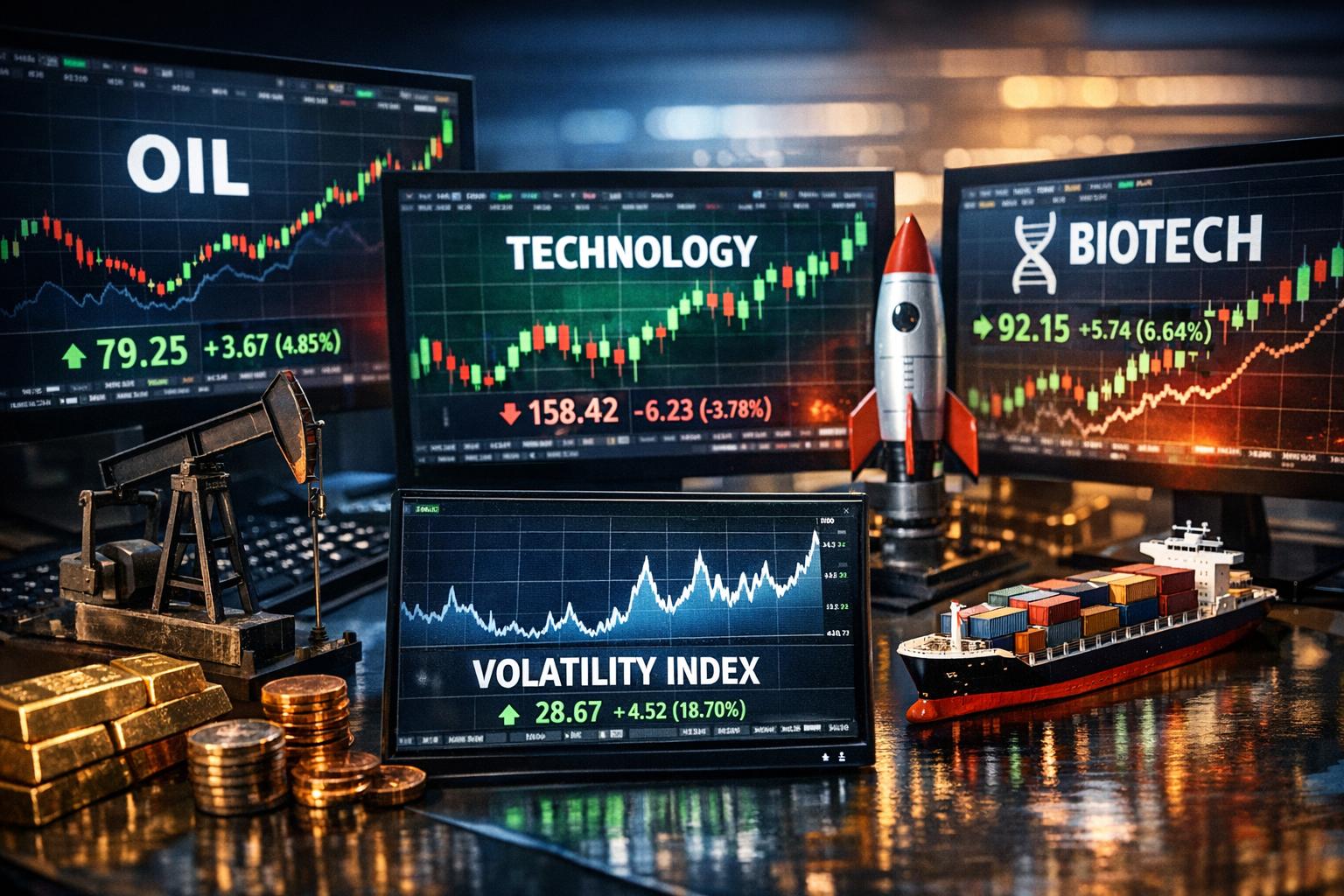
Best Sectors for Finding High-Volatility Stocks

Understanding High-Volatility Stocks

High-volatility stocks move around a lot—sometimes majestically up, sometimes unceremoniously down—often within the span of days or weeks. “High volatility” isn’t a moral judgment or a prediction that a stock will go up; it simply means the price tends to swing more than the average stock. For investors, that usually translates into two things: bigger potential gains and bigger potential shakes. If you’ve ever watched a portfolio value jump $500 and then drop $400 a few trading sessions later, congratulations, you’ve met volatility in the wild.

This article focuses on which sectors tend to contain these stocks, why those sectors behave this way, and what investors commonly miss when they try to “trade volatility” without understanding its drivers.

What “high volatility” actually means

Volatility is often measured statistically (think: standard deviation of returns). Practically, you don’t need the math to use it well. If a stock’s price fluctuates frequently and sharply, expect higher volatility. That volatility can be driven by company-specific news, broader economic forces, or both.

It’s also worth distinguishing between two common investor experiences:

  • Volatility that follows fundamentals: e.g., earnings disappoint, guidance changes, trials fail or succeed. Price swings reflect new information.
  • Volatility that follows sentiment: e.g., a hot product rumor, meme-driven trading, or speculative expectations. Fundamentals may not change as fast, but the stock still whipsaws.

In real markets, the lines get blurry. Still, knowing which driver dominates helps you decide whether the volatility is “informational” or “emotional.”

Why sector matters when you hunt for volatility

Some sectors are naturally prone to high-volatility stocks because their business models create frequent inflection points. Those inflection points show up as earnings surprises, regulatory outcomes, commodity price moves, product adoption news, or interest-rate sensitivity.

Sectors also differ in how much information the market processes quickly. For example, technology firms may deliver updates frequently and shift expectations fast. Biotech can swing hard on a single trial result. Banks can swing on macroeconomic changes that affect credit losses and interest margins.

So if you’re trying to understand where high-volatility stocks tend to live, it usually makes sense to start at the sector level. You then filter down to individual companies with the specific catalysts that can plausibly move the price.

Technology Sector

Technology is often the poster child for high volatility, mainly because innovation moves quickly and the market expects a constant stream of progress. Tech companies frequently operate in changing environments shaped by new inventions, shifting customer needs, and competitive disruption. When expectations change fast, stock prices do too.

Within technology, volatility can be especially pronounced in sub-sectors tied to major narratives—artificial intelligence, blockchain, cybersecurity, cloud infrastructure, semiconductors, and developer tools. These groups can see sudden repricing when there’s a breakthrough, a scaling milestone, a competitor leap, or a new regulation that changes how products can be sold.

Valuation swings happen because future growth is the product

Many tech stocks don’t just trade on today’s earnings. They often trade on beliefs about future growth: revenue trajectories, margins after scale, total addressable market, and the ability to sustain competitive advantage. That means the stock can react sharply to relatively small operational changes—because the market interprets the change as a signal about the company’s long-term path.

A simple example: a company launches a feature on schedule, it gets traction, and investors revise their growth assumptions upward. Price can surge quickly. On the flip side, a delay, a security incident, or public criticism can cause investors to question the roadmap, which can hit valuation even if the company still performs reasonably well in the short term.

Startups and Market Disruptors

Startups are often the most volatile within technology, partly because they’re still figuring things out. They may have limited revenue history, uneven cash burn, and products that evolve under real-world use. Markets sometimes reward them fast when they hit milestones, but punish them quickly when progress isn’t as smooth as investors hoped.

For investors, two realities can be uncomfortable:

  • Some startups are volatile because they’re genuinely progressing.
  • Some startups are volatile because they’re running out of runway or have a weak commercial plan.

Distinguishing between those two is where research matters. High volatility isn’t inherently “good” or “bad”—it’s just a signal that expectations can change quickly.

What tends to drive tech volatility in practice

Tech volatility doesn’t come out of nowhere. Common triggers include:

  • Earnings and guidance: not only results, but forward-looking statements.
  • Product cycles: launches, upgrades, failures, adoption rates.
  • Regulatory updates: privacy rules, export controls, platform rules.
  • Competitive pressure: new entrants or faster rivals.
  • Supply chain and component constraints: particularly for hardware and semiconductors.

If you keep an eye on these categories, you’ll often be able to anticipate the “why” behind price swings rather than just reacting to headlines like they’re weather alerts.

Biotechnology and Pharmaceuticals

The biotechnology and pharmaceutical industries can produce some of the most dramatic volatility in the market, because so much value hinges on discrete high-stakes milestones. Drug development is slow, expensive, and full of scientific uncertainty. When uncertainty resolves—through clinical trial results or regulatory decisions—the stock often reprices sharply.

For small and mid-cap biotechs, the dependence on one or two programs can be intense. One Phase 2 or Phase 3 readout can make the difference between “promising” and “scrapped.” That concentration risk is a major reason you see big percentage moves in these names.

Drug approval and trial results aren’t “just news”—they’re repricing events

A biotech stock may trade for months with one dominant question: will the trial succeed, and will regulators approve the drug? When the answer changes, expectations jump. That can lift the stock for a while, but it can also reverse quickly if subsequent data don’t confirm the initial result, or if competitors show better efficacy.

Some investors like this volatility because it creates opportunities around known catalysts. Others avoid it because you can be right on the science and still wrong on the timeline, dosage, safety profile, or payer dynamics. Welcome to medicine: it’s complicated, because biology refuses to sign off neatly on spreadsheets.

Innovation in Drug Development

Innovation drives volatility because it changes the probability distribution of outcomes. New approaches—personalized medicine, new trial designs, improved delivery mechanisms, or next-generation biotech tools—can shift what investors think is likely to work.

However, innovation also creates new uncertainties. Better methods can reduce risk in one area while introducing new unknowns in another. That can produce whiplash if investors interpret results too optimistically or too pessimistically.

How investors typically manage biotech volatility

Common approaches include:

  • Catalyst timing: buying ahead of specific trial readouts or approval decisions, with defined risk limits.
  • Diversification: holding multiple programs so one failure doesn’t dominate the portfolio.
  • Probability awareness: using scenarios based on trial phases and endpoints rather than treating all results as “win/lose.”
  • Financing monitoring: many biotechs dilute shareholders when cash runs low, which can pressure stock regardless of clinical progress.

You don’t need to be a medical scientist to do this. You do need to read trial updates carefully and understand what endpoints actually mean—“statistically significant” isn’t always the same as “clinically meaningful,” and the market pays attention to that difference.

Energy Sector

The Energy stocks—especially oil and gas—tend to be volatile because their revenues depend heavily on external variables: commodity prices, global demand, and geopolitical disruptions. Add in the political reality of energy policy, environmental regulations, and investor reaction to long-term energy transitions, and you get a sector where prices can swing fast.

When global economic conditions improve, demand expectations often rise. That can increase oil and gas prices, lifting energy company valuations. When growth worries rise or production oversupply appears, commodity prices can fall and press margins.

Geopolitics and currencies make energy moves louder

Energy is also exposed to geopolitical risk. Conflicts in or near production regions can disrupt supply, change shipping costs, and shift pricing. Even if a specific company isn’t directly affected operationally, the market still reprices sector sentiment quickly.

Then there’s currency exposure. Many energy firms operate across borders and receive revenue in multiple currencies. If the dollar strengthens or weakens relative to currencies where they earn revenue, reported financial results can change, affecting stocks. That means energy volatility isn’t only about oil or gas—it’s also about the financial translation effects investors track.

Renewable Energy

Within the energy sector, renewable energy companies can also be very volatile, though for slightly different reasons. Renewables often depend on government incentives, subsidies, tax credits, and power purchase agreement structures. When policy changes—or when investors revise expectations about future incentives—stock prices can move sharply.

Technology shifts matter too. A new cost curve for solar panels, battery performance improvements, or grid infrastructure upgrades can strengthen or weaken business cases quickly. Investors frequently debate whether renewables will scale economically without subsidy support. That debate can make stocks swing around as new data and policy signals arrive.

Investment horizon and renewable reality

Renewable investors sometimes tolerate volatility because they believe the long-term trend is favorable. But there’s no free lunch: short-term results can be messy due to project delays, permitting issues, cost overruns, and changing financing conditions. If you’re watching renewables, it helps to look past just “headline sustainability” and focus on contract structures, backlog quality, and the pipeline of projects that can actually be delivered.

Financial Sector

The financial sector covers banking, insurance, brokerage, asset management, and more. Its volatility often relates to interest rates, credit performance, and broader economic cycles. When conditions change quickly, banks and insurers react in ways that show up in both earnings and investor sentiment.

Financial companies can appear relatively stable in calm markets because many operate with structured revenue models. But stability can vanish when credit quality deteriorates, when funding costs rise, or when economic conditions shift from “steady” to “uh-oh.”

Banking stocks

Banking stocks can show elevated volatility during economic stress or when interest rates shift quickly. The basic logic is straightforward:

  • Rate changes affect net interest margins.
  • Economic slowdowns affect loan defaults and charge-offs.
  • Market stress can reduce fee income and increase provisions.

On top of that, banking competition matters. Fintech models can pressure traditional players by taking market share or changing expectations about digital banking features and fees. So while “banks are boring” sounds nice, the market doesn’t always reward boring. It rewards what it believes will happen next to earnings power.

Insurance and other financial sub-sectors

Insurance isn’t only about interest rates. It can swing due to catastrophe events, medical cost pressures, underwriting losses, and investment portfolio performance. Even if insurance policies are priced for risk, the market still reprices companies if it believes the risk environment changed faster than expected.

Similarly, investment brokerages and trading-focused firms can become volatile if market activity increases or drops. Volatility often becomes a measure of how investors expect capital markets to behave.

Consumer Discretionary Sector

The consumer discretionary sector includes non-essential goods and services like automotive, entertainment, travel, retail, and luxury. This sector tends to be volatile because discretionary spending is one of the first things people cut when budgets tighten. When times are good, discretionary spending expands. When times are bad, discretionary becomes “not this month.”

That makes consumer discretionary stocks sensitive to macroeconomic conditions, employment trends, consumer confidence, and supply chain realities—plus how companies position products against competitors.

Retail Segment

The retail industry segment is particularly susceptible to volatility. Retailers face relentless pressure from e-commerce competition, changing customer behavior, and inventory risk. If demand slows, inventories pile up. That can trigger discounting, lower margins, and disappointing results.

As more consumers move online, brick-and-mortar retailers can get hit harder, unless they adjust their operations. The market often swings based on questions like:

  • Is the retailer gaining or losing customers online?
  • How expensive is inventory this season?
  • Will margins hold after promotions?
  • Can the company manage logistics efficiently?

Retailers that evolve tend to exhibit lower volatility over time—less because the business becomes perfect, and more because investors feel there’s a clearer path to cash flow. Retail volatility also reflects execution risk. When companies stumble on fulfillment, tech platforms, or pricing strategy, stock prices often respond quickly.

How to spot high-volatility behavior earlier

Once you know which sectors commonly produce high-volatility stocks, the next step is figuring out which individual names show volatility characteristics that are worth your attention—and which ones are “high volatility” mostly because liquidity is thin or the company is small enough that one trade can move the price.

A few practical red flags and confirmations:

  • Frequent price gaps: stocks that “jump” on news rather than moving steadily can create fast opportunities and fast regrets.
  • Large swings around earnings: if performance surprises correlate strongly with price movement, volatility is likely structural.
  • Upcoming catalysts: clinical trial dates, regulatory calendar items, product launch windows.
  • Balance sheet sensitivity: companies that rely on external financing can become volatile when capital markets tighten.
  • Commodity or rate linkage: when a stock price tracks commodity levels or interest-rate expectations closely, volatility can intensify with macro swings.

You don’t need to predict every move. You do need to know what tends to cause moves.

Risk isn’t just the downside—it’s the timing

Many investors think volatility equals risk, and volatility does carry risk. But the timing of risk matters just as much as its size.

A portfolio can survive a -20% move if it recovers quickly. It can also suffer psychologically (and financially) if drops occur when liquidity is tight or if you’re forced to sell during the worst moment. Some high-volatility stocks require patience; others punish patience.

For example, imagine two biotech companies:

  • Company A has an expected trial readout in 30 days. Volatility may rise as the date approaches.
  • Company B has no clear timeline and needs more trials plus financing. Volatility may keep grinding because uncertainty stays unresolved.

Same sector, different risk profile. That’s why investors often separate “event-driven volatility” from “uncertainty-driven volatility.”

Common investor mistakes with high-volatility stocks

High-volatility sectors attract brave (or curious) investors. That’s fine. Bravery should come with checks, though. Here are mistakes that show up repeatedly:

Confusing volatility with opportunity

Volatility creates opportunity only if you can manage risk and structure your approach. If you buy a high-volatility stock because it “moves a lot,” you’re really betting on direction plus timing plus your ability to stick around.

Ignoring dilution and financing

Biotech and high-growth tech often need cash. When capital markets turn risk-off, financing becomes harder and dilution can hit shareholder value regardless of the underlying product progress. You can’t read clinical results properly if you ignore the cash clock.

Not understanding what consensus expectations are

A stock can drop even after “good” news if expectations were higher. Many high-volatility stocks are priced around specific benchmarks—trial endpoints, subscription numbers, churn rates, guidance levels, or margins. When those benchmarks miss, the stock can overshoot on the downside because the market reprices quickly.

Using a one-size-fits-all holding period

A strategy that works for trading event catalysts might fail for longer-term uncertainty resolution. If you treat every volatile stock like it’s an earnings flyer, you’ll probably end up stressed and late to the lesson.

Practical ways investors can approach volatility

There are different styles of dealing with high-volatility sectors. You don’t have to copy anyone else’s playbook, but it helps to pick a method intentionally rather than by accident.

Scenario-based research instead of certainty seeking

Volatile stocks rarely offer certainty. Better practice is to map possible scenarios: success with strong adoption, success with weaker-than-expected margins, partial success with additional trials, delay or regulatory setbacks. Your goal isn’t to “find the one true answer.” Your goal is to understand what would need to be true for the stock to justify the price.

Position sizing with volatility in mind

Volatility affects position sizing. A position that feels comfortable with a stable stock can become too large when price moves swing. If you’ve ever woken up to a portfolio down 10% overnight, you know why position sizing matters. Volatility is generous with surprises.

Tax and liquidity awareness

Different investment structures have different friction. Some investors trade often, others hold for periods governed by tax rules. High-volatility stocks can also face liquidity constraints; thinly traded names can make it harder to exit on your schedule.

Monitor catalysts and “what changed”

Instead of reacting emotionally to daily moves, track what changed from the last time you checked. Did earnings guidance move? Did a clinical endpoint interpret differently? Did regulators issue a new standard? Did the market just get bored? Bored markets can still move, but they don’t move for fundamentally different reasons each time—usually.

Real-world examples of sector volatility in action

You’ve probably noticed how headlines can trigger price swings across the sectors we discussed. A few common patterns:

  • Tech: a company beats revenue and updates guidance upward—shares surge. Then competition or margin pressure appears in the next report, and shares fall sharply.
  • Biotech: a trial delivers positive results—shares jump and options prices spike. Later, safety concerns or follow-up data reduce enthusiasm.
  • Energy: an unexpected supply disruption pushes oil prices—energy stocks react. If demand expectations weaken shortly after, the stock can reverse.
  • Financial: interest-rate expectations shift—bank shares reprice rapidly. Credit default concerns can amplify the move.
  • Consumer discretionary / retail: a brand misses sales expectations—discounting expectations rise, and margins get questioned.

In each case, volatility isn’t random. It’s the market shifting its probability estimates about a future that may look clearer in hindsight, but never in real time.

How to narrow down within a high-volatility sector

Once you choose the sector, you still need to find the specific candidates. That process usually comes down to five practical filters:

  • Catalyst clarity: is there a known event with a timeline?
  • Balance sheet strength: does the company have enough funding to survive delays?
  • Sensitivity: how exposed is the stock to macro variables like rates, oil prices, or consumer demand?
  • Execution: can management consistently hit milestones?
  • Market expectations: is the stock priced for optimism, pessimism, or “priced for perfection”?

This doesn’t eliminate risk, but it reduces the kind of risk that comes from guesswork.

Getting comfortable with volatility without pretending it’s harmless

High-volatility stocks can reward investors who understand why the price swings happen and who can maintain discipline when the chart looks like a broken elevator.

If you’re choosing sectors, the overall pattern is consistent: technology, biotechnology/pharmaceuticals, energy (including renewables), financials, and consumer discretionary often contain high-volatility names. Within each sector, the reasons differ—innovation cycles, trial and regulatory outcomes, commodity geopolitics, interest rates and credit quality, and consumer spending habits.

And here’s the part investors usually learn the hard way: volatility doesn’t guarantee profits. It guarantees movement. If you’re ready to manage that movement—through research, scenario planning, and position sizing—then high-volatility sectors can become a place where your homework pays off faster than your feelings.

Final thoughts

Investors seeking high-volatility stocks should consider sectors like technology, biotechnology, energy, financial, and consumer discretionary, each offering different ways for prices to swing and different types of risk to monitor. Conduct thorough research before committing capital, track the specific drivers behind each move, and be honest about your time horizon and risk tolerance. Volatility can create real opportunities, but only when you treat it as information—not as a casino signal.
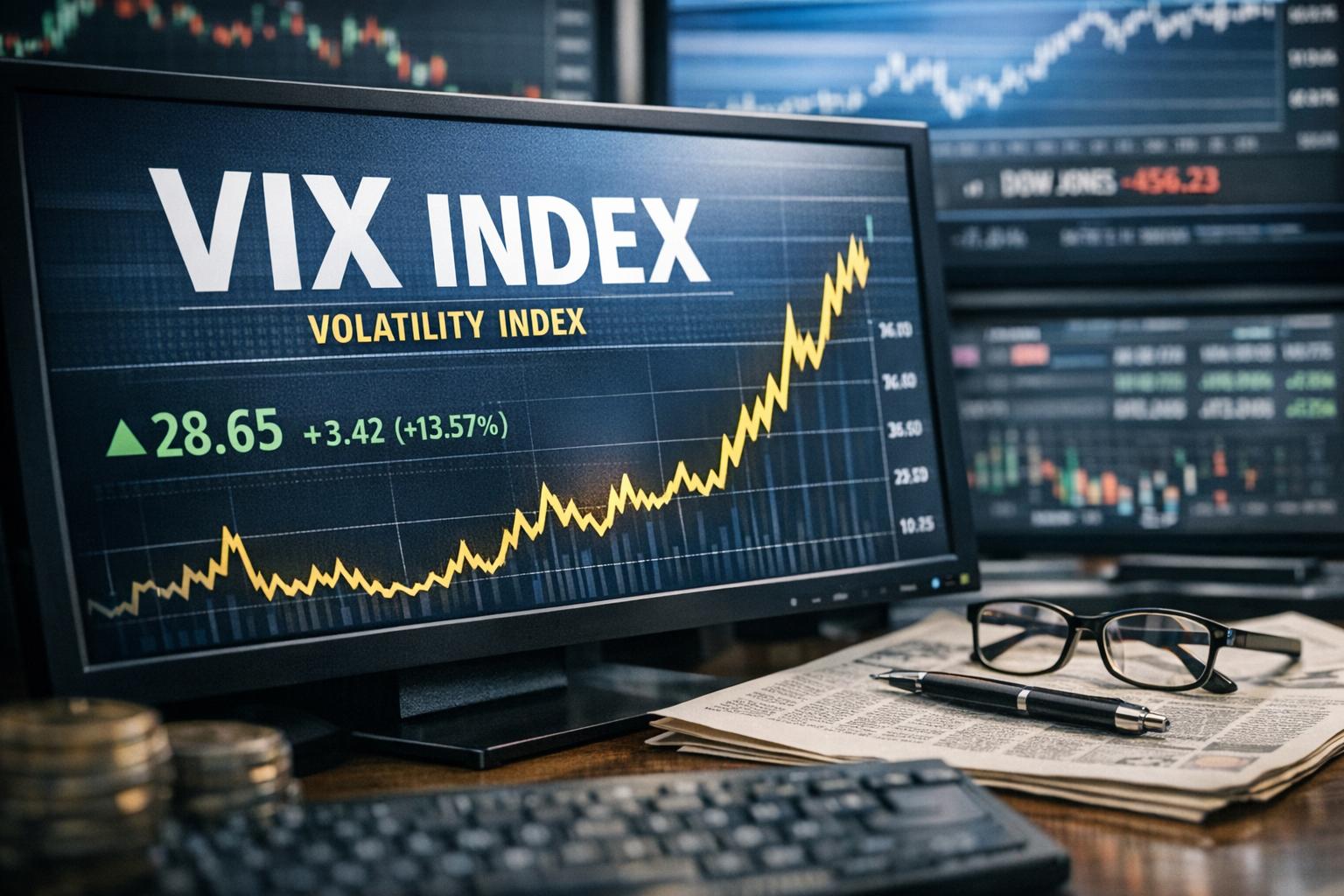
Understanding the VIX Index: The Volatility Gauge

Introduction to the VIX Index

The VIX Index has earned its nickname for a reason. Market participants often call it the “fear gauge” or “fear index,” because it gives a quick, numbers-first view of how anxious investors seem to be about future volatility. That makes it popular with retail traders, professionals, journalists, and anyone who’s ever watched a “calm” market suddenly decide it’s done with calm.

At its core, the VIX reflects the stock market’s expectations for volatility over the next 30 days, derived from option prices tied to the S&P 500 index. You can think of it as a real-time snapshot built from how traders price risk using S&P 500 index options. When option buyers (especially put option demand) get more worried, volatility expectations tend to rise—and, correspondingly, so does the VIX.

It’s also worth saying something practical up front: the VIX is not there to tell you whether the market will be up or down next week. It’s there to tell you what volatility the market is pricing in. In other words, it measures the market’s expectation of variation in returns, not the market’s opinion on the direction of returns. Traders can hate this distinction, but it matters. (It matters more than people want it to, because markets love to ignore our comfort zones.)

Understanding Market Volatility

Volatility is how much the price of a financial instrument tends to vary over time. In practical terms, it tells you the likely “range” of movement around average behavior. High volatility typically means the market is moving more aggressively—fast swings up, fast swings down. Low volatility usually means price action is steadier, at least according to how traders are pricing the future.

That’s why the VIX matters. It doesn’t measure uncertainty in a philosophical sense. It measures uncertainty as inferred from option prices—basically, what traders think volatility will be. And because volatility often rises when investors expect stress (earnings surprises, economic releases, geopolitical headlines, rate shocks, you name it), the VIX quickly becomes a proxy for sentiment.

There’s also a second-order effect that people sometimes miss: when volatility expectations rise, the market often reprices many risk assets at once. That’s not because every participant suddenly becomes psychic. It happens because risk models, portfolio constraints, and hedging costs all react to volatility assumptions. If volatility expectations increase, the cost of hedging increases; if the cost increases, risk appetite frequently drops. The VIX sits right in the middle of that feedback loop.

How the VIX Works

While the VIX gets talked about in simple terms, the construction is anything but simple. The index is calculated using a range of S&P 500 options. Specifically, the VIX methodology extracts implied volatility from out-of-the-money option prices across multiple strike prices. It uses both put and call options, then applies a weighting structure that turns those option prices into a single index figure.

These options tend to be highly liquid, which is one reason the VIX became the default “volatility barometer” for the U.S. equity market. High liquidity generally makes the implied volatility signal less noisy than it would be if you tried to compute a volatility expectation from thinly traded options.

If you’ve ever wondered why people react to the VIX at market open like it’s the weather forecast—this is why. The index is updated continuously during market hours, which makes it useful for real-time risk monitoring.

One more practical detail: implied volatility is forward-looking because it’s backed out from current option prices. Options traders are willing to pay premiums based on probabilities they assign to future volatility. That willingness shows up directly in the option chain, and the VIX effectively reads that chain like a report card.

The Importance of the VIX Index

The VIX provides a single, widely recognized number that many participants treat as an estimate of expected volatility. That matters because markets rarely move in perfectly linear ways. Even without a full options book, the VIX gives a quick sense of whether investors are pricing a “rougher ride” ahead.

In broad strokes:

  • Higher VIX generally signals expectations of larger price swings (often linked to market stress).
  • Lower VIX generally signals expectations of smaller price swings (often linked to calmer market conditions).

The practical value shows up around major news. For example, before or during events that can move equities—central bank statements, big CPI prints, unexpected geopolitical developments—the VIX often shifts quickly. Investors treat it as a warning light or, depending on their temperament, a signal to wait or to act.

If you’ve spent any time around a trading desk during a headline day, you probably heard the same conversation in different words: “Vol’s changing.” The VIX is one of the fastest, most standardized ways to communicate that change. It’s not the only measure, but it’s often the first one people mention because it’s easy to reference.

Using the VIX for Investment Decisions

People use the VIX in different ways, and it’s worth separating “watching” from “trading.” Most investors aren’t constantly buying VIX futures. They’re trying to decide how aggressive to be with risk.

Here are a few common patterns:

  • Risk reduction: If the VIX rises and stays elevated, some investors reduce exposure to long equity positions or shift to lower-volatility strategies.
  • Hedging: Fund managers may buy protection (or structure options positions) when implied volatility looks expensive or cheap relative to expectations.
  • Contrarian thinking: Some traders interpret very high VIX readings as signs that fear is already “priced in,” potentially offering better risk-reward entry points—though this requires discipline because fear can last longer than anyone’s patience.

It’s also common to see VIX referenced in daily market commentary, especially during drawdowns. If you’ve ever read “the VIX jumped” during a selloff, you already get the gist: traders became more willing to pay for protection, which often lifts the volatility forecast embedded in options.

In real portfolio work, the VIX often shows up alongside other controls, too. For example, a fund might limit exposure when volatility rises above a threshold, or it might tighten stop-loss behavior during higher-vol regimes. Even if the VIX isn’t the deciding factor, it frequently acts as a shorthand for “conditions changed, treat risk differently.”

Limitations of the VIX

The VIX is useful, but it’s not a magic crystal ball. Two limitations show up again and again:

  • It reflects expectations, not a guarantee: A high VIX doesn’t mean the market will immediately drop. It means traders expect higher volatility over the next month.
  • It’s context-dependent: The same VIX level can mean different things depending on trend, macro regime, and liquidity conditions. Without context, it’s easy to overreact.

Using the VIX alone can lead to rushed decisions. A safer approach is to pair the VIX with price action, broader market indicators, and—if you trade options—an understanding of how implied volatility interacts with strike selection and time-to-expiration.

Also, remember that people interpret the VIX through their own experiences. A retail investor might see VIX 22 and think “not too crazy.” A systematic trader might see it as a regime change if it broke from a long stretch below 14. The number is the same; the meaning isn’t.

History and Development of the VIX Index

The VIX didn’t appear because someone woke up and said, “Let’s invent fear as a number.” It emerged from a practical need: market participants wanted a standardized, transparent metric for expected volatility based on option markets.

In 1993, the Chicago Board Options Exchange (CBOE) introduced the VIX. At the time, the goal was straightforward—offer a measure of expected volatility using S&P 500 options. Over the years, the index has been refined so it better represents the volatility implied by options across a fuller set of strike prices and expiration terms.

Even though markets evolve, the underlying idea remains consistent: options embed expectations about volatility, and the VIX converts that embedded information into a way that anyone can compare over time.

If you zoom out, that “comparability over time” is the real reason the VIX stuck. Before standardized indices like this, implied volatility could be estimated, but it was harder to compare across days and participants. The VIX created a shared reference point. People still disagree about how the future will go, but at least they can agree on the volatility expectation input they’re talking about.

Calculation and Methodology

Modern VIX construction uses a consistent approach: it extracts implied volatility from a strip of S&P 500 options across multiple strike prices. The index methodology then converts those implied volatilities into a volatility estimate that corresponds to a theoretical 30-day horizon.

Rather than relying on just a few option strikes, the broader strike selection reduces distortions. In early versions, fewer strikes and a simpler approach limited how completely the index captured market-implied volatility. The current framework generally uses a wider strike set so the index reflects a more comprehensive view of option demand across different price levels.

Under the hood, the process involves:

  • Sampling option prices across strikes (both calls and puts, with rules to ensure consistency)
  • Computing implied volatility inputs from those prices
  • Weighting the contributions across strikes
  • Converting the results into the final index value expressed in volatility terms

For readers, you don’t need to reproduce the formulas in a notebook. But you should know the index is not a random “market mood meter.” It’s engineered from option pricing mechanics.

One helpful way to think about methodology is that it’s designed to approximate a specific time horizon and to dampen distortions from any single strike or expiration. Traders may still debate the “perfect” representation of volatility, but the VIX is broadly accepted because it’s consistent and transparent in how it maps option prices into an index number.

Why Investors Pay Attention to the VIX

People watch the VIX because it’s available, standardized, and recognized across the market. Trader psychology does not travel with paperwork, but volatility expectations do. When risk rises, the cost of protection changes first in implied vol—then you see the effect in spot market behavior.

The VIX also helps risk management. Even if you’re not trading options, the index gives a sense of whether “normal” is still applicable. A portfolio that’s comfortable in a low-vol regime might behave very differently once volatility expectations increase.

It’s also a timing tool. During a typical trading day, the VIX can tell you whether volatility is being repriced quickly or slowly. That matters if you manage intraday risk, if you trade options with short time to expiration, or if you’re managing leverage based on volatility forecasts.

The VIX in Context of Strategic Portfolios

Professional portfolio managers don’t treat VIX as the only variable, but it often shows up in risk frameworks, including:

  • position sizing rules (how much risk to hold at different volatility expectations)
  • stress testing assumptions (what drawdowns might look like)
  • hedging triggers (when to buy protection)

It’s also common for trading systems to incorporate volatility indices as features. For example, a strategy might reduce leverage when VIX climbs above a threshold, or it might widen intraday bands when volatility increases.

That’s the practical value: VIX gives you a quantifiable “knob” for volatility-regime awareness. Without something like that, managers would have to estimate implied volatility themselves, one option chain at a time, which is… a lot.

In hedge fund and institutional settings, “a lot” turns out to be expensive. The VIX saves time and simplifies communication across teams. When everyone uses the same reference metric, you reduce the chance that different models generate different interpretations of “volatility is up.”

Interpreting VIX Levels

There are no universally perfect cutoffs—markets don’t read textbooks—but certain ranges get used frequently in commentary.

  • Below 20: often associated with relatively stable conditions, where investors expect less movement.
  • 20 to 30: typically indicates moderate uncertainty. Markets may still be tradable, but price action can be less forgiving.
  • Above 30: commonly signals heightened uncertainty and a greater probability of sharper swings.

What matters is how VIX behaves relative to its recent history. A VIX move from 12 to 18 might feel dramatic to a trader accustomed to stability, even if it’s still “low” in absolute terms. Likewise, a VIX reading of 28 might look tame if it’s below recent extremes—or alarming if it’s rising quickly from 18.

Also, try not to treat VIX levels as “risk on/off” switches. A VIX of 27 might still mean less risk than a prior period of 35—or it might mean something totally different if it’s coming off an unusually low-vol stretch. Volatility isn’t just a level; it’s a change relative to what the market is used to.

Applications Beyond Traditional Equity Markets

Because the VIX is built from S&P 500 index options, it originates in U.S. equities. Still, it has grown into a broader risk reference. Traders in other asset classes often monitor the VIX because equity volatility spills over into other markets—directly through portfolio exposure and indirectly through risk sentiment.

In times of stress, you’ll notice correlations tighten, and “risk-off” behavior can dominate. The VIX often becomes part of the language used across desks, not because it describes everything, but because it describes something central: the cost of volatility expectations in equities.

For example, if implied volatility rises in the equity index, you often see changes in how investors value risk across credit and rates. That doesn’t mean every relationship will line up neatly, but it does mean the VIX can function as an early indicator of broader risk repricing.

Over time, derivatives based on the VIX also expanded the use cases. Instead of only watching implied volatility in the underlying equity options, traders can take positions tied to the VIX itself.

VIX Derivatives: Leveraging Volatility

Once the market realized investors wanted ways to hedge and speculate on volatility expectations, VIX derivatives moved from niche to mainstream. These include VIX futures, VIX options, and exchange-traded products (ETPs) linked to VIX exposure.

There are a few ways this shows up in real trading:

  • Hedging: If you have an equity portfolio that’s sensitive to volatility spikes, VIX-linked products may offer a way to add protection.
  • Speculation: Traders may attempt to profit from changes in expected volatility by taking positions based on future VIX levels.
  • Volatility trading: Some strategies focus directly on implied volatility dynamics and term structure, rather than direction of the S&P 500 itself.

If that sounds like “trading volatility,” it is. But it’s also trading something more specific: how the market prices volatility over time, including expectations about how volatility might evolve.

A small real-world story: a colleague once described options trading as “watching a ceiling fan.” You’re not controlling which room you’re in, but you can control trade-offs: the fan speed (volatility expectations), the time window (expiration), and the cost (option premium). VIX derivatives are similar. You’re mostly controlling exposure to the volatility forecast, not the “room temperature” of the economy.

Challenges Associated with VIX Derivatives

VIX derivatives aren’t “set it and forget it” instruments. The biggest challenges usually relate to pricing mechanics, product design, and the fact that volatility behaves differently from stock prices.

Some common issues traders run into:

  • Sensitivity to futures curves: VIX futures reflect expected volatility across different maturities, not just one point in time. A futures curve shape (contango or backwardation) can influence returns.
  • Holding period effects: Many ETPs aim to track volatility exposure over short horizons. If you hold longer than the product’s design expects, tracking can deviate.
  • Liquidity and spreads: Even though VIX-related products can be actively traded, liquidity can vary by contract month and by product type.
  • Complexity for non-options traders: Some people treat VIX derivatives like equity trades. That’s when they get surprised. Volatility products require a different mental model.

Think of it like this: if you buy a storm umbrella, you want it to work during the storm, not just during the forecast. With VIX derivatives, “the storm” can be noisy, and the timing matters.

Another nuance: volatility products can show negative expected performance over some environments, especially if the structure tends to decay. That’s not a moral failure of the product. It’s a mathematical consequence of how futures and implied volatility interact. If you don’t account for that, you can lose money while being “right” about the general idea that fear exists, simply because the timing didn’t cooperate.

Future Implications of the VIX

The VIX is likely to remain central because implied volatility derived from options will always be one of the most direct ways to infer risk expectations. As markets evolve—higher participation in options, more automated trading, and more events that move prices—the signals embedded in option prices will still be worth watching.

It also serves as a behavioral indicator. The VIX reflects how investors and institutions price fear, and fear rarely behaves politely. When volatility expectations rise and stay elevated, it often changes how markets price risk across the board.

At the same time, market structure keeps changing. New volatility products, evolving hedging practices, and ongoing updates to index methodologies mean you shouldn’t treat VIX as static. It’s stable as an instrument, but the market around it moves.

Over time, you may see more volatility indices and more ways to measure stress across asset classes. Still, for equities tied to S&P 500 options, the VIX remains the standard reference point because of its history, liquidity, and broad adoption.

How to Use the VIX Without Making It Your Whole Personality

You don’t need to obsess over the VIX every minute to make it useful. For most investors, it’s best treated as context.

Here’s a practical way to use it:

  • Watch whether the VIX is rising, falling, or flat relative to recent history.
  • Compare VIX movements with major market moves (including whether price and volatility are moving together).
  • If you trade options, think about whether volatility is cheap or expensive relative to your expected distribution of returns.

As a real-world example, consider a portfolio manager deciding whether to maintain equity exposure into an event week. If the VIX is rising and implied volatility for near-term expirations is bid aggressively, the manager might reduce risk or buy protection. If the VIX is flat and markets are stabilizing, the manager might hold steady. It’s not a guarantee, but it’s a coherent process.

In practice, the VIX works best when you already have a risk framework. Without a framework, you can stare at the number and create meaning where none exists. With a framework, you can treat the VIX as one input among many, which is what most professionals do, even if they talk about it like it’s a solo act.

Common Misinterpretations

The VIX attracts attention partly because people project narratives onto it. Sometimes that helps—meaning it clarifies what’s being priced. Other times, it confuses.

Common misunderstandings include:

  • “High VIX means the market will crash immediately.” Not necessarily. High VIX means expected volatility is elevated; price could chop sideways or rally with big swings.
  • “Low VIX means stocks are safe.” Low volatility can coexist with declines, especially if the decline happens without volatility expanding at first—or if volatility is being mispriced for a given time horizon.
  • “The VIX predicts direction.” The VIX is about volatility expectations, not a direction forecast.

If you keep returning to that core distinction—volatility expectation versus price direction—you’ll avoid a lot of avoidable mistakes.

One of the more common mistakes is treating VIX changes as an index of “news intensity” rather than implied volatility. News matters, sure, but the VIX is what traders are willing to pay for future volatility. That willingness depends on supply and demand for options protection, hedging needs, and how traders expect future events to shape realized volatility.

VIX in Practice: Scenario Thinking

It helps to imagine a few scenarios rather than treating the VIX like a standalone headline. Here are three simplified scenarios that show why investors care and why they also get into trouble.

Scenario 1: Calm market slowly gets noisy

Suppose equities trade higher for weeks with a VIX around the mid-teens. Then, after a major macro event, the VIX starts climbing. It may not surge to 30 right away, but upward drift in VIX suggests rising volatility expectations. Investors who ignore that drift might face larger drawdowns than their risk model assumed. Those who pay attention might reduce exposure or adjust hedges.

This scenario is common because markets often move from “price trending smoothly” to “price moving around more” without an immediate collapse. The VIX can show that shift in the background. If you manage risk with a stable-vol assumption, the drift matters. It also matters for option strategy selection because a slowly rising VIX usually means option premiums start to firm up even if the stock index keeps grinding upward.

Scenario 2: VIX spikes during stress, but markets don’t behave as expected

In a selloff, the VIX can jump quickly. The instinct is to assume “fear is extreme, so a rebound is near.” Sometimes a rebound comes. Sometimes it doesn’t. Volatility can remain high while price continues to grind lower—or it can whip around as participants reposition. The rational response is to treat the VIX as a volatility expectation tool and manage risk accordingly, not as a timetable.

In real trading, this is where discipline gets tested. People want simple stories: “VIX is high, therefore the bottom is in.” Markets rarely agree to that script. A spike can reflect the market’s demand for protection, changes in hedging flows, and repricing of future uncertainty. Even if fear looks “extreme” relative to recent levels, the market can keep repricing volatility until conditions stabilize.

Scenario 3: VIX back to normal, hedges start to hurt

After a stressed period, implied volatility can collapse. If you bought long volatility protection (directly or indirectly), the position might lose value even if you hedged successfully. That’s not a failure of your decision—it’s how volatility instruments work: you’re paying for expected volatility. If realized volatility comes in lower than implied, the hedge can “cost” you. Investors need to plan for that reality rather than being shocked by it.

This scenario is also where many investors learn the difference between protection that works during stress and protection that always makes money. A hedge can do its job while still being expensive in mark-to-market terms. The cost shows up when implied volatility reverts. That’s normal. The trick is to factor it into expected outcomes and not treat it like a surprise bill from the universe.

How Traders and Investors Usually Interpret the VIX Signal

Once you get past the basics, the VIX tends to get used in a few consistent patterns. You’ll see the same themes in risk reports and trading desk notes.

Volatility regime awareness

The most common use is identifying whether the market is in a volatility regime that matches your strategy. Trend-following systems, for example, often behave differently when volatility rises. Mean-reversion strategies might also need recalibration. The VIX helps you label the current environment.

There’s a practical reason this works. Many strategy assumptions depend on how fast and how far prices move. Volatility affects that directly. Even if a model can handle direction changes, it might struggle when the “movement width” changes. The VIX acts as a convenient proxy for that width.

Hedging cost awareness

For options traders, the VIX is related to implied volatility levels. If the VIX is high, the market is charging more for volatility exposure. That can affect choosing strike prices, expiration dates, and hedge ratios. If you’ve ever bought an option and watched it decay faster than your patience, you understand the idea—higher volatility can mean higher option premiums, and that can change your expected outcomes.

Another nuance: the option premium isn’t just about volatility level; it also reflects how traders think volatility will change over time. That shows up in the term structure and in the pricing of options across strikes. The VIX abstracts this into one number for quick comparison, but you still need the option chain to execute trades intelligently.

Risk appetite signals

Beyond the math, VIX reflects how much participants are willing to pay for protection. If the VIX rises because puts are becoming expensive relative to calls (or because the broader implied volatility surface shifts), it’s often the market’s way of saying risk appetite has cooled.

In periods where investors rotate into “safety,” you’ll see the VIX and other substitutes for risk sentiment move together. That said, the VIX can also rise during rallies if investors scramble for protection against big downside tail risks. So again: volatility expectation can increase without an immediate bearish price outcome.

Limitations Revisited: What the VIX Doesn’t Tell You

Because the VIX gets described as “fear,” it’s easy to assume it captures everything about sentiment. It doesn’t.

The index:

  • doesn’t directly measure liquidity stress in every market segment
  • doesn’t tell you whether investors are afraid of earnings, rates, credit, or geopolitics—just that volatility expectations are elevated
  • doesn’t reveal the entire distribution of possible returns; it compresses a lot of option pricing information into a single number

That means the VIX works best as an input to a broader decision-making process. Ignoring other signals can be costly. Overweighing VIX can also be costly. The trick is balance, and yes, “balance” is one of those words that gets overused. In this case, it’s still the right advice.

It also helps to remember that the VIX is tied specifically to S&P 500 index options. If your exposure is concentrated elsewhere—individual stocks, sector ETFs, credit spreads—the VIX is still a useful reference point, but it’s not guaranteed to match what you own. You can treat it as a market-wide signal, not a personal dashboard for your portfolio.

Lastly, the VIX tells you what implied volatility is for the specific model assumptions behind option pricing. Options markets embed assumptions about risk premia, expectations, and hedging flows. No single index can replace understanding those mechanics.

Conclusion

The VIX Index earns its reputation because it translates option market pricing into a practical expectation for 30-day volatility. It’s not a directional forecast, and it won’t prevent bad calls from happening. But it provides a consistent, widely used indicator of how much price movement investors expect, and that makes it valuable for risk management and trading context.

If you want to use it well, treat the VIX as information about volatility expectations—not as a prophecy. Pair it with market structure, price action, and the specific time horizon relevant to your positions. And if you step into VIX derivatives, be mindful of product mechanics and holding period effects, because volatility products don’t behave like stocks. A little respect goes a long way.

For most people, the best starting approach is simple: monitor the VIX for regime changes, understand what a rising or falling VIX implies about implied volatility, and only then decide whether to hedge, adjust exposure, or stay put. That’s not glamorous, but it’s how you avoid turning “fear gauge” into “fear strategy.”

How Interest Rate Changes Affect High-Volatility Stocks

Understanding Interest Rate Changes

Interest rate changes don’t happen in a vacuum. When a central bank adjusts rates, it effectively changes the “price” of money across the economy. That price tag shows up everywhere: in what it costs banks to borrow, what companies pay to fund growth, and what consumers pay on loans and mortgages. It also shows up in the return people earn (or don’t earn) on savings and bonds. In practice, interest rate decisions often shape expectations months in advance, and then the market reacts as the reality settles in.

Most interest-rate moves originate from the central bank, which uses interest rates as a main tool of monetary policy. In simple terms, higher rates tend to slow down spending and borrowing, while lower rates do the opposite. Central banks usually balance two conflicting goals: keeping inflation from running too hot, and avoiding unnecessary damage to economic growth. Getting that balance wrong can turn “economic cooling” into a long and uncomfortable slowdown, so policy decisions typically come with careful communication and data-checking.

This article focuses on how interest rate changes ripple into asset prices, especially stock markets, and why high-volatility stocks can feel the effects more sharply than many investors expect.

How Central Banks Think About Rates

Central banks adjust interest rates with policy goals in mind. The two big ones are:

Controlling inflation: When inflation rises too quickly, higher rates can reduce demand. Borrowing becomes more expensive, credit growth cools, and consumers and businesses tend to buy less on credit.
Supporting economic activity: When the economy slows or risks slowing too much, lower rates can encourage borrowing and spending. Loans become cheaper, and investors may move money from low-yield assets into riskier investments.

A helpful way to think about it is this: interest rate changes alter incentives. When costs of borrowing rise, some projects that looked profitable at lower rates stop looking profitable. When borrowing costs fall, more projects clear that profitability threshold.

The Immediate Effects: Borrowing and Savings

Interest rates influence at least two everyday financial outcomes: debt costs and savings returns.

1) Consumer borrowing costs
For individuals, rate changes can show up through several channels. Variable-rate loans can reprice quickly. Even fixed-rate loans don’t escape interest rate gravity—they usually get priced at higher rates when new lending originates. Mortgages are the obvious example. When central bank rates rise, lenders often demand higher mortgage rates for new borrowers.

2) Credit availability and deal terms
It’s not only the interest rate itself. Higher rates often lead banks to tighten lending standards. That means some borrowers get worse terms or get turned away entirely, which reduces demand further.

3) Savings and bond yields
When rates rise, yields on savings accounts and many fixed-income products generally rise as well. That shifts investor preferences. If your savings are suddenly earning more, it becomes harder to justify higher-risk equity investments for some people—at least until equity valuations adjust.

The Business View: Costs of Capital

Businesses care about interest rates through their cost of capital—the mix of borrowing costs (debt) and returns required by investors (equity). If a company can’t raise money cheaply, expansion slows.

For many firms, interest rates affect:

Project financing: Higher rates can make new facilities, R&D, or acquisitions less affordable.
Refinancing risk: Companies with large amounts of debt may face higher interest expenses when they refinance.
Consumer demand: Even if a firm’s borrowing costs stay manageable, higher rates can reduce consumer spending, which hits sales.

This is one reason markets tend to react quickly to interest rate expectations. Even before the central bank actually changes rates, investors reprice the likely future costs and profits.

Impact on Stock Market Dynamics

Stock markets are forward-looking. They don’t just react to what happened—they react to what investors believe will happen next. Interest rate changes matter because they affect valuations, especially through two common valuation approaches:

– Changes in expected future cash flows (via economic activity)
– Changes in the discount rate used to translate future cash flows into today’s value

When interest rates rise, borrowing costs rise for firms and consumer demand can cool. That can reduce revenue growth and increase financial drag, which makes earnings projections less optimistic. At the same time, the discount rate typically rises. Higher discount rates reduce the present value of future profits. With both effects working together, it’s not unusual to see stock valuations fall after rate increases, especially when earnings growth expectations don’t improve.

On the flip side, when interest rates fall, borrowing costs ease, capital spending becomes more attractive, and the economy usually gets a modest boost. Discount rates often fall too, which tends to support higher stock valuations.

Bonds vs. Stocks: The “Relative Return” Game

People often compare stocks to bonds, because interest rate changes alter bond yields directly. In many rate-increase cycles, bond yields become competitive enough that some investors reduce equity exposure. This shift can compress price-to-earning multiples, particularly for companies without consistent cash flow.

In more “rate-friendly” environments, equities tend to look more attractive relative to bonds. When bond yields drop, investors may lean into equities for return potential—sometimes at a faster pace than fundamentals alone would justify.

High-Volatility Stocks: An Overview

High-volatility stocks are shares that tend to experience large price swings over relatively short periods. That movement can be driven by real changes in business performance, shifting investor sentiment, or simply the market’s re-pricing of expectations.

High-volatility stocks often show up in sectors where future outcomes are harder to predict, such as technology, biotech, and other growth-oriented areas. These firms might not yet have stable earnings, or they might be dependent on outcomes that can take longer than investors hope. Because future cash flows are more uncertain, the market tends to “price uncertainty,” which often leads to larger swings.

In plain terms: high-volatility stocks can deliver impressive gains, but they can also punish patience quickly. If you’ve ever followed a stock that went up 20% in a week and down 25% the next, you’ll understand why investors treat this category with caution.

High-Volatility Stocks and the Interest Rate Connection

High-volatility stocks can be sensitive to interest rate changes for several reasons. It’s not always because the company’s underlying products suddenly change. Often, it’s because the market’s assumptions about future value shift.

When rates rise, the market typically becomes less tolerant of uncertainty. Investors may demand higher returns for riskier assets, and the discount rate used in valuation frameworks increases. For high-volatility stocks, which already live on the edge of prediction, that adjustment can hit harder.

When rates fall, the opposite can happen: risk appetite rises, discount rates fall, and investors may pay more for future potential—especially for companies that are still building revenue.

Why High-Volatility Stocks are Sensitive to Interest Rates

Several mechanisms explain why high-volatility stocks often react more sharply than “steady eddy” businesses.

1. Cost of Capital
When interest rates rise, the expense of financing increases. Even if a high-volatility company doesn’t rely on debt heavily today, it may still need external funding to scale. Many growth companies depend on capital markets for expansion, R&D, and working capital. If funding becomes more expensive, the company’s growth plan can slow, and investors often cut projections quickly.

This is the classic “future growth gets priced higher” problem. Investors may decide that the cost of reaching future targets has increased, so they mark down valuations.

2. Discounted Cash Flow Models (DCF)
A lot of valuation work—formal or informal—comes down to discounting expected future cash flows. Even when investors don’t calculate exactly like a spreadsheet, the underlying logic resembles one: future earnings are worth less when the discount rate rises.

When interest rates climb, the discount rate in DCF-like thinking rises. That reduces the present value of cash flows expected in later years. High-volatility companies often have cash flow streams that are more back-loaded in time (because profitability may be farther away). That makes them more sensitive to discount rate changes.

So even if a company executes fairly well, the valuation can still drop because the market’s valuation math changed.

3. Increased Uncertainty and “Risk-Off” Shifts
High-volatility stocks already carry uncertainty even when interest rates are stable. Rising rates can trigger a broader risk-off mood. Investors move toward safer assets like government bonds, or they favor stocks with steadier cash flows and less financing dependence.

When liquidity gets cautious, high-volatility stocks can feel it first. They often have more “moving parts” in terms of investor sentiment. If money is rotating toward safety, these stocks can see demand dry up faster than investors expect.

This is also why diversification matters. If all your exposure sits in rate-sensitive, high-volatility names, your portfolio becomes a single-factor bet on the interest rate story.

What It Looks Like in the Real World

Consider a scenario many investors lived through: a period of inflation concerns pushes rates higher. At first, the market argues it’s “temporary.” Then bond yields rise, and the equity market starts repricing. Growth stocks with weak or early-stage profitability can get hit more than mature companies, even if their long-term narratives remain intact.

That doesn’t mean the companies are suddenly worse—it means the market’s willingness to price long-dated profit projections at the same level has declined.

Another common pattern appears in tech and biotech during rate cuts. When rates fall, investors often chase growth stories again. Sometimes that helps fundamentally solid companies. Sometimes it helps companies whose only real edge is “being in the right sector at the right time.” Either way, volatility increases.

Strategies for Investors

If you hold high-volatility stocks, you don’t want to pretend you can control interest rate moves. You can’t. Rates follow macroeconomic conditions and central bank goals, not your portfolio preferences. What you can do is build a framework for decision-making.

1) Watch interest rate expectations, not just past moves
Markets often react to what rates might do next. Investors usually pay attention to central bank communications, inflation trends, and labor market indicators. Those inputs shape the path of future rates.

A rate hike already priced in can behave differently than a surprise hike. The practical advice: track the “expectations temperature,” not just the last headline.

2) Match risk level to your time horizon
High-volatility stocks can swing hard over weeks. If you need the money in a year or two, volatility isn’t your friend. If you can tolerate multi-year volatility, you’re more likely to ride out valuation swings tied to rate changes.

This is basic, but it’s worth repeating because people love optimism right up until they need cash.

3) Diversify across factors, not just company names
Diversification isn’t only about owning many stocks. It’s about avoiding that single-factor pileup. A portfolio full of high-growth, high-uncertainty names can still behave like one concentrated bet. Mixing sectors, valuation profiles, and financing models can reduce how strongly interest rate narratives dominate your returns.

4) Review balance sheet risk
Some high-volatility companies are more exposed than others. Pay attention to debt levels, refinancing needs, and liquidity. If a business has short-dated maturities or relies on frequent capital raises, rate pressure can become more than a valuation issue—it can become operational.

5) Consider valuation rather than letting stories run the show
Rate changes often affect valuation multiples. If a stock becomes expensive relative to its likely cash flows, even decent execution might not prevent drawdowns when discount rates rise. Conversely, if rates fall and a stock is reasonably priced, the upside can be more sustainable.

Further Reading

For those looking to deepen their understanding of how market dynamics and interest rate changes affect investments, websites like Investopedia offer detailed articles and expert commentary. These can help you connect the dots between monetary policy, bond yields, and equity valuation behavior without turning every article into a finance degree.

How to Read Interest Rate Moves Without Losing Your Mind

People often treat interest rate announcements as if they happen on a single day and then everything resets. In reality, markets build expectations gradually. If you want a calmer way to interpret interest-rate changes, focus on the three things markets react to most: the direction of the policy rate, the expected path over time, and how the economy looks relative to inflation and employment targets.

Policy Rate vs. Expectations: The “Already Priced In” Problem

Sometimes a central bank changes rates and the market barely moves. That happens when the move matches what investors already expected. Other times, a smaller change triggers a bigger reaction because the communication suggests future policy will differ from what markets had priced.

This is where the market gets noisy. People love the headline; investors care about the forward-looking guidance.

Inflation and Jobs: Why Two Indicators Can Be Louder Than One

Central banks typically respond to inflation because it’s the reason rates exist. But inflation doesn’t live alone. The labor market matters too. Strong employment can keep demand from cooling too fast, which can keep inflation sticky. Weak employment can reduce demand quickly, which may push central banks toward easing.

So when inflation drops but unemployment rises (or starts rising), the interest rate outlook can change fast. High-volatility stocks can react quickly because their valuations depend on assumptions about future growth, and those assumptions change under different economic conditions.

Bond Yields as a Translation Layer

If you want a quick “translation layer” between central bank policy and stock market valuation, watch bond yields. Bond yields capture much of the market’s expectation for future rates and inflation risk. When yields rise, discount rates effectively rise for equities too. When yields fall, the opposite tends to happen.

Bond yields aren’t the only input for stocks, but they’re often one of the faster indicators of changing financial conditions.

Valuation Sensitivity: Why Some Stocks Brace While Others Flinch

Not all stocks react the same way to interest rate changes. Part of that is business model, and part of it is investor expectations.

Stable Cash Flow vs. Future-Heavy Performance

A straightforward concept helps explain much of the difference. Stocks with stable, near-term cash flows tend to be less sensitive to discount rate changes because the market depends less on far-future outcomes.

High-volatility stocks often have performance expectations that stretch further out, which makes their valuation more sensitive to discounting. When the discount rate rises, far-future cash flows shrink in present value more than nearer cash flows.

Debt Structure and Financing Flexibility

Another factor is how a company handles debt. If a firm already has manageable leverage and long-term fixed-rate debt, the immediate impact of rate changes might be smaller. If the company has floating rate debt or frequent refinancing needs, rate changes can show up in expenses and cash flow sooner.

Investors notice. They don’t wait for an earnings report to figure out whether a refinancing wave is coming.

Competitive Dynamics Under Different Rate Regimes

Interest rate changes can shift competitive dynamics too. For example:

– In higher rate environments, businesses that depend on rapid expansion may struggle more.
– In lower rate environments, those businesses might gain share faster because financing becomes easier.

Markets anticipate these shifts. High-volatility stocks can respond quickly because their future growth narrative is often tied to financing conditions.

What Investors Usually Get Wrong About Rate Sensitivity

If you’ve been around markets long enough, you’ll notice a recurring pattern. People often confuse cause and effect or overreact to short-term moves.

Confusing a Rate Change With an Economic Signal

Sometimes central banks raise rates because inflation is running too hot. Other times rates rise because growth is strong and the central bank wants to avoid an overheating situation. The stock market reaction depends on which story investors believe. A “rate hike” alone doesn’t tell the whole picture.

Assuming All Growth Stocks Behave Like Each Other

Growth stocks aren’t a monolith. A profitable growth company with strong cash generation will usually react differently than a pre-profit biotech firm burning cash for clinical trials. Both can be “high volatility,” but their cash flow timelines and financing needs differ.

Overlooking Liquidity and Positioning

Even if the fundamental logic points toward one outcome, stock prices can overshoot. Liquidity dries up in certain market conditions, and crowded trades can unwind quickly. High-volatility stocks often experience larger swings partly because liquidity and positioning matter more when volatility is high.

Practical Examples: How Rate Changes Can Hit High-Volatility Stocks

Let’s make this less abstract. Below are scenarios investors often recognize.

Scenario A: Rate Hike Cycle

Imagine inflation stays stubborn, and the central bank raises rates. Bond yields rise. Discount rates increase. As a result, investors may stop paying huge multiples for profits expected later. High-volatility growth stocks can sell off even when their products look fine, because the valuation framework changed.

At the same time, some companies lose access to cheaper capital and slow hiring or expansion. That means the valuation move may become partially “real” later through weaker results, reinforcing the stock decline.

Scenario B: Rate Cuts During Slower Growth

Now imagine growth slows and inflation cools enough to justify cuts. Bond yields fall, discount rates decline, and investors reach for return again. High-volatility stocks often benefit because lower rates reduce the cost of capital and improve sentiment for risk assets.

But there’s a catch. If rate cuts happen because the economy is already in trouble, weaker demand can still hurt revenues. In that case, the stock may rally at first (because rates improved) but then struggle if earnings disappoint.

Scenario C: “Soft Landing” Communication

Sometimes the central bank signals stable policy or gradual change rather than dramatic shifts. Markets may interpret forward guidance as reducing uncertainty. High-volatility stocks tend to respond positively when uncertainty decreases because investors feel more comfortable pricing future growth.

This can happen even without an immediate rate move. Communication matters.

Building a Simple Interest-Rate Risk Framework

You don’t need a PhD to manage this kind of risk. You need a repeatable way to think through it.

Step 1: Identify your portfolio’s rate sensitivity

Ask what proportion of your holdings depend on external financing, long-dated profit expectations, or valuation multiples that can compress quickly. If most of your portfolio looks like that, you’re likely more exposed to interest rate changes, whether you meant to be or not.

Step 2: Track the “inputs” consistently

Instead of checking rates every day, pick a small set of indicators to monitor monthly or quarterly. Many investors use inflation data, labor market trends, central bank statements, and bond yields.

The trick is consistency. Markets move, but your process should stay steady.

Step 3: Decide in advance how you’ll react to volatility

High-volatility stocks can test your emotions. If you decide ahead of time whether you’ll hold through drawdowns, rebalance, or reduce exposure when valuations stretch, you reduce impulse decisions.

Investors tend to do best when they treat their strategy like it belongs to them, not to the daily news cycle.

Frequently Asked Questions

Do high-volatility stocks always fall when interest rates rise?

No. Markets may already price in expected rate hikes. Also, if a particular company’s fundamentals strongly improve, it can offset some rate pressure. Still, high-volatility stocks often get hit harder on average because valuation sensitivity and uncertainty tend to rise together.

Are high-volatility stocks “bad” investments?

Not automatically. High volatility can mean higher opportunity as well as higher risk. The real question is whether you can handle the swings and whether you have a plan for position sizing and risk management.

Should investors avoid high-volatility stocks during tightening cycles?

Some investors reduce exposure or increase diversification during tightening cycles, but avoidance isn’t the only approach. If you believe fundamentals will improve faster than the valuation headwind, you might still hold positions. Just don’t confuse a belief with a guarantee.

Final Thoughts

Interest rate changes move through the economy like weather moves through a region. It affects spending, pricing, funding, and confidence. Stock markets interpret those changes quickly through expectations and discount rates. High-volatility stocks, by virtue of uncertain or future-heavy performance, tend to feel that impact more strongly.

If you’re invested in these stocks, the goal isn’t to predict every rate decision. It’s to understand what rates do to valuations and funding costs, recognize why volatility can spike, and manage your risk accordingly. That approach won’t make market swings disappear—but it can keep you from making the worst possible trade: turning a long-term decision into a short-term panic.

The Connection Between Market Sentiment and Stock Volatility

Understanding Market Sentiment

Market sentiment is the overall “mood” investors have about a particular security, a sector, or the financial market as a whole. It isn’t a single metric you can plug into a spreadsheet and call a day. Instead, it’s the combined effect of what investors believe, worry about, expect next, and sometimes—let’s be honest—feel after reading the latest headline.

When investors lean positive (optimistic, confident, willing to buy), prices can move quickly and volatility often rises as momentum builds. When the mood flips negative, selling pressure can arrive just as fast. When sentiment stays neutral, markets often trade in a more restrained pattern, at least until something changes—usually something loud like inflation data, earnings, interest-rate rumors, or geopolitical developments.

In practical terms, market sentiment influences how aggressively investors act. That action then shows up in price movement, trading volume, options pricing, and the speed with which markets reprice risk. Investors who understand sentiment can sometimes get ahead of the crowd, or at minimum, avoid getting trampled when the crowd panics.

The Big Picture: What Market Sentiment Actually Measures

Market sentiment reflects collective expectations and risk perception. Those expectations might be about interest rates, economic growth, earnings strength, corporate guidance, regulatory changes, or even how confident investors feel about the next few weeks of trading.

It’s also worth noting that sentiment doesn’t always match fundamentals. Companies can report decent results and still see their stock drop if guidance disappoints. Alternatively, a company can look expensive on historical metrics and rally anyway if investors believe the future will justify the price.

That mismatch is often where sentiment analysis becomes useful. Instead of asking “Is the company good?” you also ask “How do investors feel about what they think is coming?”

The Role of Investor Psychology

At the core of market sentiment is investor psychology. Psychology influences investor behavior, and behavior influences price. Investors often react emotionally to information—especially news with urgency. An economy report that surprises forecasts can trigger immediate optimism or doubt. Earnings calls can spark confidence or trigger a “wait, that’s not what I expected” reaction. Geopolitical developments can shift risk perception overnight, sometimes with little connection to a specific company’s financial performance.

A useful mental model is that markets aggregate beliefs. But investors don’t process beliefs like calculators. They process them with emotions, timing preferences, and biases. That’s how sentiment can become exaggerated in both directions—optimism can feel unstoppable right before it runs out of steam, and fear can feel inevitable right before it softens.

Investor sentiment often mirrors psychological biases like herding behaviors or the tendency to overreact to short-term information. Herding shows up when investors follow price trends and narratives without carefully checking whether the underlying story still holds. Overreaction shows up when a single data point or rumor shifts expectations too far, too fast, before new information corrects the direction.

When sentiment becomes overheated, price targets move regardless of whether the real fundamentals have shifted proportionally. This is one reason asset bubbles form and, in time, break. It’s also one reason sudden sell-offs can happen even when long-term investors are still “fine,” just not comfortable enough to hold through near-term uncertainty.

How Sentiment Drives Volatility

Market sentiment has a direct impact on volatility, which represents how much and how quickly prices change. Volatility can be thought of as the market’s “temperature.” When sentiment shifts suddenly, traders adjust positions rapidly. That adjustment creates wider price swings, higher intraday movement, and faster reactions to new information.

Here’s a common scenario. A widely followed company reports stronger-than-expected earnings, and guidance suggests continued improvement. Investors interpret not just the results, but the confidence behind them. That often triggers bullish sentiment—buying accelerates, order books thin out, and the stock rallies quickly.

Now flip it. An unexpected surprise—like a major lawsuit, a sudden leadership change, a downgrade, or a surprise fiscal policy announcement—pushes sentiment bearish. Traders who had been positioned for stability may exit. Speculators may pile on. That can create a sharp sell-off and increase volatility because uncertainty becomes harder to price.

One more practical angle: sentiment-driven volatility shows up not only after events, but also before them. Markets often “price in” expectations early. If traders think an economic release will be bad, they may sell ahead of time. If they think it will be great, they may buy ahead of time. Either way, trading activity builds before the event, then volatility can spike again when the actual numbers arrive.

In active sentiment-driven markets, trading volume often increases as more participants react to narrative shifts and risk perception changes. When investors believe uncertainty is rising, they trade more—sometimes to hedge, sometimes to exit quickly, and sometimes to chase momentum before it fades.

Sentiment Isn’t One Thing: Risk-On vs Risk-Off

Sentiment often shows up as broad market preferences. A “risk-on” mood means investors are more willing to take chances, buying assets they perceive as higher risk with the expectation that conditions will support them. A “risk-off” mood means investors prefer safety, selling riskier assets and shifting toward cash, government bonds, or defensive sectors.

This movement matters because it influences where capital flows. Even if a specific stock has good news, it can still struggle if the overall market is in risk-off mode. Conversely, a stock can rally on sentiment even if fundamentals are only average, simply because the market is eager to buy whatever looks tradable.

Indicators of Market Sentiment

Because sentiment is partly emotional and partly expectation-based, there’s no single perfect indicator. Traders and analysts use a mix of measures. Some are derived from price behavior and trading activity, and some come from survey data or volatility tools.

The Volatility Index (VIX): Often known as the “fear gauge,” this index measures expectations of future market volatility, derived from options pricing. A higher VIX usually signals greater anxiety about market moves ahead. When VIX spikes, it often indicates investors are paying up for protection or pricing in more turbulent outcomes.

Trading Volume: Trading volume can reflect changes in sentiment. Rising volume during a price move often suggests conviction—investors aren’t just watching, they’re acting. If volume surges while price rises, it can imply bullish momentum. If volume surges while price falls, it often reflects bearish urgency.

Sentiment Surveys: Surveys capture what people say they feel. For example, the American Association of Individual Investors (AAII) survey tracks how individual investors gauge market conditions. Surveys help you see whether investors lean bullish or bearish and whether that mood shifts over time.

These indicators work best when used together. A VIX spike alone can mean fear, but it can also mean positioning changes in options markets. A volume spike can reflect routine rebalancing or liquidity shifts, not just emotion. Surveys can be useful, but they represent a slice of participants rather than the entire market.

Additional Sentiment Clues Traders Watch

If you’ve spent any time watching markets, you’ll notice sentiment leaves fingerprints in places like breadth indicators, credit spreads, and options skews. A few examples:

Options implied volatility and skew: If implied volatility rises for puts more than calls, investors may be paying extra for downside protection. That often points to bearish or risk-averse sentiment.

Credit spreads: When spreads widen, markets often perceive higher default risk among corporate borrowers. That’s frequently associated with worsening sentiment about the economy or corporate health.

Market breadth: Breadth measures how many stocks participate in a move. A rally where most stocks rise often signals healthier sentiment than a rally powered by only a few large names.

The point isn’t to memorize a checklist. The point is to recognize patterns: volatility, positioning, and participation all tell a story about how investors feel.

How Sentiment Analysis Fits Into Actual Trading

Sentiment analysis helps investors and traders interpret market behavior that may not fully show up in traditional fundamental or technical analysis. The basic idea is to treat sentiment as a variable that can accelerate, delay, or distort price moves.

In the simplest form, sentiment analysis can flag when the market appears overly optimistic or overly pessimistic. Over time, markets often mean-revert when sentiment becomes too extreme. That doesn’t guarantee a reversal tomorrow, but it can help identify periods when the risk/reward skew changes.

Experienced investors often combine sentiment analysis with other tools because sentiment alone is rarely enough. For example, bullish sentiment might be strong because earnings are good and guidance improves. But if technical signals show weakening momentum, investors might treat bullish sentiment as fragile. Alternatively, if sentiment is extremely bearish while fundamentals remain stable and valuation looks reasonable, investors may see a contrarian opportunity—buying when fear dominates.

A practical way to think about it: sentiment can tell you how fast quotes are moving and how long they can keep moving without support. Fundamentals tell you what a business is worth. Technical analysis tells you how prices have been behaving. When those three stories align, trades often have a cleaner logic.

Why Sentiment Reverses (Sometimes) and Persists (Other Times)

Sentiment doesn’t always flip quickly. Sometimes it persists because the same driver keeps feeding it—like sustained economic weakness, a credit tightening cycle, or a prolonged bull market narrative backed by strong earnings.

But sentiment does reverse when new information contradicts the existing narrative. A central bank signal changes rate expectations. A company clarifies guidance. Inflation surprises in a direction investors didn’t anticipate. A geopolitical risk cools down. Any of these can shift sentiment. When enough investors recalibrate expectations at the same time, the market can move sharply in the opposite direction.

There’s also timing. Even when fundamentals remain unchanged, sentiment can rotate because investors have different time horizons. Short-term traders chase momentum and headlines. Long-term investors focus on valuation and earnings power. If short-term participants get exhausted, price action can stabilize—even if the bigger story hasn’t changed.

Examples of Sentiment-Driven Moves

To make this real, here are a few typical patterns investors recognize:

Earnings beats but stock drops: This usually happens when the beat isn’t big enough or guidance disappoints. Sentiment turns negative because expectations were even higher.

Macro data surprises: A jobs report that surprises on the upside can be interpreted as “growth is fine” and later as “rates might stay higher for longer.” If investors can’t agree, volatility often rises and sentiment becomes mixed.

Regulatory or geopolitical headlines: These often hit risk sentiment across markets. Even if a company isn’t directly involved, investors may reduce exposure to sectors perceived as vulnerable to policy uncertainty.

Contrarian bounce: In some sell-offs, sentiment becomes so negative that selling pressure overshoots. If new information isn’t immediately worse—and valuation becomes compelling—bearish sentiment can ease, triggering a bounce.

These are common because investor psychology is common. People react to surprises, compare them to expectations, and trade accordingly. Sentiment moves when expectations move.

Sentiment, Fundamentals, and Technicals: How They Interact

One reason market sentiment gets debated is that it can seem to conflict with other analysis. Fundamentals say one thing; charts show another; sentiment says people feel something different entirely. The reality is they often interact rather than agree perfectly.

Fundamentals set the ceiling and floor: Over time, a business’s earnings power, balance sheet health, and competitive position constrain where the stock could end up.

Sentiment sets the pace: Even if a stock has solid fundamentals, sentiment determines how quickly investors will bid up or sell it during uncertain periods.

Technicals reflect behavior: Charts often show the combined effect of sentiment and fundamentals through patterns like trend persistence, breakouts, or breakdowns.

When sentiment and fundamentals move in the same direction, price trends often feel “smooth.” When they diverge, you can get choppy trade: sharp reactions to headlines, reversals, and longer periods where investors wait for confirmation.

Practical Example: A Mid-Cycle Company

Imagine a mid-sized industrial company with stable revenue and a balance sheet that doesn’t look like it’s made of paper. Fundamentals aren’t scary. But it’s sensitive to order cycles and capex spending. In a slowdown scare, investors may become heavily bearish. They might sell simply because the market expects fewer orders, even before the next quarter confirms it.

If sentiment drives selling faster than fundamentals deteriorate, the stock can drop more than the long-term story suggests. Then, if new contract wins show resilience, sentiment can shift abruptly. The same investors who were selling may scramble back in, building an upside move that looks disproportionate to the single data point—until more consistent evidence arrives.

This is where sentiment analysis can help an investor frame risk correctly. You still need to know whether the business is fine, but you also need to know whether the market is panicking for rational reasons or emotional ones.

Tools and Data Sources for Sentiment Analysis

Investors don’t just rely on a single indicator. They build a picture from multiple sources, then decide whether the picture suggests opportunity or danger.

Here are common categories of tools, described in plain English:

Volatility and options-based measures

Because options prices embed expectations, implied volatility metrics often act as a proxy for investor uncertainty. If implied volatility rises rapidly, traders may be bracing for bigger moves. If skew changes, investors may be pricing asymmetrical risk (more downside than upside, for example).

Trading behavior data

Volume, bid-ask spreads, and liquidity trends can reflect how crowded a trade is and how willing investors remain. When liquidity dries up and spreads widen, markets often feel jumpy. Sentiment tends to correlate with that “fragile” state.

Survey and positioning measures

Surveys show what investors are thinking. Positioning metrics, like futures positioning reports (where available), can show how much is already committed. When positioning becomes lopsided, the market can become vulnerable to sharp reversals if new information arrives.

News and narrative signals

News flow doesn’t just provide facts; it frames facts. A neutral event can be interpreted differently depending on context. Many sentiment models incorporate text analysis of news or earnings transcripts, but even without sophisticated systems, human observers can track whether stories are getting more positive or more worrying.

This is also where “timeliness” matters. Investors respond quickly to headlines. A narrative can swing in a day, while the fundamentals it references may change slowly over months.

Resources such as financial education platforms, including Investopedia, offer valuable insights and tools for conducting effective sentiment analysis. These platforms can enhance an investor’s knowledge base, equipping them with the necessary skills to understand and interpret market sentiment efficiently.

Common Mistakes When Using Sentiment

Sentiment analysis can be useful, but it’s easy to misuse. A few common errors show up repeatedly, even among smart investors.

Using sentiment as the only decision rule

Sentiment should inform your view, not replace it. If you buy only because sentiment is bearish, you might miss the reason it’s bearish in the first place. Maybe the fundamentals actually deteriorated. Or maybe the company faces real structural risks. Sentiment without context becomes a guessing game.

Ignoring the time horizon

Short-term sentiment can flip because of headlines, while long-term sentiment changes because of real changes in earnings, margins, and macro conditions. If you invest for years, but you act like every headline will matter equally, you’ll probably make yourself miserable.

Assuming extremes always reverse

Markets can stay irrational longer than any of us want to admit. Extreme pessimism can persist if economic risks keep escalating. Extreme optimism can persist if earnings keep beating expectations. Mean reversion happens sometimes, not always.

Overfitting to one indicator

If you watch only VIX or only one sentiment survey, you might miss the broader picture. The best results usually come from cross-checking multiple signals—price action, volatility, volume, and fundamentals.

How to Build a Simple Sentiment Workflow

You don’t need an advanced quant setup to use sentiment intelligently. A workable approach can look like this:

Step 1: Note the current market mood

Look at broad indicators like volatility measures, major index behavior, and whether breadth supports the trend.

Step 2: Check what’s driving it

Determine whether the mood is tied to macro expectations, company-specific news, or risk-off behavior across sectors.

Step 3: Compare sentiment to fundamentals

Ask whether the sentiment shift seems proportionate to what’s changed. If investors got ahead of the facts, you might see opportunity; if investors got it right, don’t fight the tape just because sentiment feels tense.

Step 4: Validate with trading behavior

See whether price movement and volume match the narrative. Heavy volume that confirms the move usually indicates stronger conviction than a thin, weak drift.

Step 5: Set risk controls based on volatility

If sentiment implies higher volatility, you size positions and set expectations accordingly. If you don’t, the market will do it for you—usually at the least convenient moment.

Real-World Use Cases: Where Sentiment Shows Up

Sentiment analysis matters most in situations where expectations drive price. That includes earnings seasons, interest-rate decision periods, and periods of political or economic uncertainty.

Here are a few realistic examples.

1) Earnings season trades

Before earnings, options markets often price the expected move. If implied volatility is high, that suggests investor uncertainty is elevated. After earnings, the stock can swing more than fundamentals alone would predict—because the market can reprice expectations quickly. Investors using sentiment signals generally pay close attention to what changes in guidance, not just the earnings number.

2) Central bank meetings

Rate expectations drive sentiment across many assets. Even if a decision seems “as expected,” sentiment can shift based on the tone of communications. A slightly more hawkish stance can push risk-off behavior, raising volatility and changing sector leadership.

3) Risk events and policy announcements

When policy uncertainty rises—tariffs, regulatory changes, fiscal measures, or major geopolitical tensions—sentiment can become defensive across markets. Stocks with perceived exposure to the changing rules can drop sharply. Once clarity improves, sentiment can recover even if the final policy outcome takes longer to fully affect earnings.

4) Contrarian opportunities during fear

Some investors intentionally look for moments when sentiment looks excessively negative compared to fundamentals. This can occur during broad sell-offs where specific companies get dragged down by macro fear. If you use valuation discipline and confirm that the business still has a workable baseline, contrarian timing becomes more than guesswork.

Wrapping It Up: Why Market Sentiment Still Matters

Market sentiment plays a vital role in shaping the dynamics of financial markets. It affects how investors interpret information, how quickly they act, and how aggressively they adjust their positions. In many cases, sentiment changes faster than fundamentals—so price can move in ways that feel “illogical” if you only look at company metrics.

Recognizing and interpreting shifts in sentiment can help investors make better decisions, manage risk more realistically, and spot opportunities that might not show up through fundamentals or technicals alone. The relationship between investor psychology and market sentiment is messy on purpose—it reflects how humans behave under uncertainty.

So yes, sentiment is not magic. But when you treat it like a useful signal—rather than a single truth—you gain a clearer view of what’s happening right now and what might happen next.

How to Manage Risk When Trading High-Volatility Stocks

Understanding High-Volatility Stocks

High-volatility stocks tend to move more than the average stock—sometimes in a single day, sometimes over a single headline. You’ll see sharp rallies, sudden sell-offs, gaps at the open, and plenty of “wait, what just happened?” moments. For traders, volatility can be an advantage because it creates opportunities to enter and exit at better prices than you’d get in a calm market.

That said, high volatility is also where portfolios go to be stress-tested. The same price swings that can deliver quick gains can just as quickly erase weeks of progress. So if you’re looking at stocks known for aggressive price movement, you need a plan that treats risk as a daily operating system—not a suggestion you remember when things get calm.

This article breaks down how high-volatility stocks behave, what drives their movement, and—most importantly—how to manage that risk in a practical, repeatable way.

What “high-volatility” actually means

Volatility is basically how much a stock’s price changes over time. In plain English: if the stock’s price tends to jump around a lot, it’s high volatility.

Traders often look at volatility measures such as:

  • Historical volatility: how much the price has moved in the past (usually measured over a time window)
  • Implied volatility: derived from options prices, indicating how much the market expects the stock to move
  • Average true range (ATR): a measure of average daily range that helps set trade levels

But you don’t have to memorize all formulas to use volatility. A practical rule: if the stock regularly swings more than the broader market, and those swings match with news cycles, earnings, macro events, or sentiment shifts, you’re dealing with high volatility.

Why these stocks move so aggressively

Price swings rarely happen “for no reason.” High-volatility stocks usually have one or more of the following traits:

1) Market speculation and thin liquidity

Some stocks trade in a way that allows fast price changes when buyers and sellers don’t overlap smoothly. Smaller-cap names, newly listed stocks, and companies with lower average volume can experience outsized moves. When liquidity is thinner, a modest flow of orders can push prices pretty far.

If you’ve ever watched a chart where the line looks like it’s been shaken instead of plotted, liquidity is often part of the story.

2) Earnings, guidance, and binary announcements

Earnings reports can create volatility because the outcome matters a lot. A company can beat expectations and still fall if guidance disappoints. Or it can miss and surge if the narrative changes (for example, margin improvement, cost cuts, or a major contract win).

Other “binary” events include FDA decisions (biotech), regulatory approvals (fintech/health/energy), mergers, major product launches, and large contract announcements.

3) Economic indicators and interest-rate sensitivity

Some stocks react more dramatically to macro data because their valuation depends heavily on discount rates, growth expectations, and risk appetite. If rates rise faster than expected, longer-duration growth stocks can take a hit. If recession fears fade, the reverse can happen just as quickly.

Even if you follow company fundamentals, macro shocks can overwhelm them in the short run.

4) Sentiment cycles and positioning

Sometimes volatility comes from crowd behavior. If a stock becomes extremely popular, the market can overshoot in both directions. When traders feel trapped, they may rush to exit. That “positioning unwind” can turn a normal correction into a fast drop.

This is why two stocks can look similar on a fundamentals basis but trade completely differently during stressful periods.

The double-edged sword: opportunity and risk

High volatility can help traders because it creates more frequent chances to:

  • Identify breakouts and breakdowns
  • Capture mean reversion moves (price returning toward a recent average)
  • Work short-term trades around predictable event timing (earnings calendar, data releases)
  • Use technical levels with wider room for movement (like support/resistance zones)

But risk rises too. Volatile stocks can:

  • Gap past your stop-loss level (especially overnight)
  • Trigger momentum trades and then reverse quickly
  • Make it harder to judge “normal” versus “dangerous” movement

So the goal isn’t to avoid volatility—it’s to control your exposure to it.

Importance of Risk Management

Trading high-volatility stocks without risk management is like driving fast on a road you know has potholes. It can work—until it doesn’t. Risk management exists to prevent one bad trade from damaging your ability to trade tomorrow.

For volatile names, risk management plays three roles:

  • Limits damage when the trade goes wrong
  • Controls emotion by making decisions mechanical
  • Preserves capital so you can continue learning and adjusting

If you’re building a trading plan, risk management isn’t a separate section on a checklist. It’s the structure underneath everything else.

Risk management should be measurable

A common mistake: thinking risk management means “I’ll be careful.” Carefully is vague. Vague is dangerous.

Instead, define risk in numbers you can track. Examples:

  • Maximum loss per trade (in dollars or percentage)
  • Maximum open risk at any moment (sum across positions)
  • Maximum daily loss limit (so you stop trading when you’re rattled)
  • Time-based rules or invalidation levels (when the trade thesis no longer holds)

Once you define those, volatility becomes just a parameter—not a panic button.

Diversification as a Risk Management Tool

Diversification spreads risk across different stocks, sectors, or strategies. The idea is simple: if one position gets hit hard, it doesn’t sink your whole account.

In practice, diversification helps most when your holdings don’t all react the same way to the same event. Some traders diversify across:

  • Industries (tech, healthcare, industrials, energy)
  • Market styles (growth vs. value, cyclical vs. defensive)
  • Correlation levels (stocks that don’t always move together)
  • Trade types (long positions, hedges, short-term tactical trades)

Diversification works because markets don’t all move identically

Diversification is based on the fact that different assets can respond differently to the same economic event. For example, a high-rate environment might pressure certain growth stocks but leave more value-oriented sectors less affected. Meanwhile, a commodity-related driver might boost energy and industrials while tech stumbles.

You’re not trying to predict the future. You’re trying to reduce the odds that one surprise ruins everything.

Watch out for the illusion of diversification

Here’s the part people forget: owning “different stocks” isn’t enough if they all depend on the same theme. For instance, if you own multiple high-volatility tech growth names, you might be diversified on paper but concentrated in one risk factor—like interest rates, revenue timing, or sentiment.

A useful question to ask before placing trades: “If the market shifts sharply, do all of these names get hit for the same reason?” If yes, diversification benefits shrink.

Position Sizing

Position sizing decides how big you make each trade. It determines how much of your capital is at risk if the stock moves against you.

For high-volatility stocks, position sizing matters more than usual because the distance to your stop and the speed of price changes are both likely to be larger.

How to size a trade for volatile names

A widely used method is to set a fixed percentage risk per trade. Example logic (not a rule you must follow): if your plan allows 1% risk on a trade, and your stop-loss is placed so that a move to that stop represents a 1% loss, then your share quantity follows automatically.

The inputs you need:

  • Entry price
  • Stop-loss level (or another invalidation point)
  • Account size
  • Max risk per trade

Once those are set, you can calculate position size. This approach keeps volatility from turning into account damage.

Limiting single-stock exposure

A common recommendation is to limit the maximum capital allocated to one high-volatility stock to a small fraction of the overall portfolio. The exact number depends on your style and risk tolerance, but the principle stays the same: avoid letting one idea dominate your results.

A useful way to think about it: you’re not trying to bet your trading career on a single candle.

Setting Stop-Loss Orders

Stop-loss orders are often treated like a safety net. But they’re not magic. They’re a rule you place on your broker system that says: “If price reaches X, exit my position.”

In volatile markets, two things matter:

  • Price can move fast.
  • Price can gap past your stop level.

So you should set stops based on your trading plan, not based on hope.

Where stops should come from

The stop-loss level should usually tie to your trade thesis through one of these:

  • Technical invalidation (below support for a long, above resistance for a short)
  • Volatility-based distance (using ATR or recent trading range)
  • Time-based exit logic (if the move doesn’t happen within a set window)

If your stop is too tight, random noise will take you out. If it’s too wide, the trade becomes too costly when wrong.

Balancing protection and “breathing room”

Volatile stocks need room. Charts can look like they’re “wrong” for a while before they prove you right. That’s why the stop placement needs to reflect normal price movement.

A practical approach is to compare your stop distance to the stock’s typical daily range. If stop distance is smaller than what the stock usually does, you’re likely to get stopped out repeatedly even when the bigger trend eventually helps.

Other exit tactics beyond a single stop

Some traders use:

  • Trailing stops once the trade reaches a profit threshold
  • Partial exits (sell part of the position when price hits a target)
  • Time stops (exit if momentum fades after a certain number of sessions)

None of these removes risk. But they can reduce the chances that you turn a manageable loss into a large one.

Utilizing Technical and Fundamental Analysis

Risk management limits damage—but analysis helps you decide what to trade in the first place. Technical and fundamental analysis serve different purposes and work better together than they do in isolation.

Technical analysis answers: “Where is price likely to go next, based on what it has been doing?”

Fundamental analysis answers: “What does the company actually represent, beyond today’s chart?”

High-volatility stocks complicate things because price may move far from fundamentals in the short term. Still, fundamentals can matter for longer holds and for spotting whether a move is likely to reverse or continue.

Technical Analysis

Technical analysis uses price movements, patterns, and indicators to estimate future behavior. Traders often rely on chart structures and momentum/mean-reversion signals.

Common tools include:

  • Moving averages for trend direction and dynamic support/resistance
  • Relative Strength Index (RSI) to gauge overbought/oversold conditions
  • Volatility indicators (including ATR) to calibrate stops and targets

For high-volatility stocks, technical levels tend to matter because many traders react to the same support and resistance areas. When enough people place orders around those levels, the levels become self-reinforcing.

What technical analysis can help you do

A good technical framework can help you:

  • Plan entry points that match your strategy (breakout vs. pullback)
  • Define invalidation levels for stops
  • Set realistic targets based on historical movement
  • Avoid trading when volatility is “out of character” for that stock

And yes, sometimes it helps you avoid bad trades too—like buying a “dip” that keeps dipping because the chart structure never stabilized.

Fundamental Analysis

Fundamental analysis tries to estimate a company’s intrinsic value. In volatile stocks, fundamentals can get buried by sudden changes in sentiment, but they can still matter in three ways:

  • Quality check: helps you avoid low-quality businesses that collapse under stress
  • Thesis alignment: ensures the trade idea matches the business outlook
  • Reversion logic: if price is temporarily outrunning value, fundamentals can support longer-term recovery assumptions

Core areas include:

  • Financial health (cash flow, debt, margins)
  • Earnings quality (are profits real or just accounting optics?)
  • Revenue growth and guidance reliability
  • Competitive position and management execution

Example: earnings volatility doesn’t mean fundamentals don’t matter

Let’s say a stock drops 15% after earnings. Technically, you may see oversold conditions and a support level forming. But fundamental analysis might reveal that the miss wasn’t random—it could reflect shrinking demand, weakening margins, or a balance-sheet stress. In that case, the stock can remain volatile to the downside even if the chart briefly looks “cheap.”

On the other hand, if the earnings beat but the company also raised guidance and the sell-off seems driven by confusion or temporary expectations, fundamentals suggest the volatility might calm down after the market digests the news.

The lesson: treat technical signals as timing tools; use fundamentals to decide what kind of volatility you’re dealing with.

Staying Informed and Adapting Strategies

High-volatility trading is partly a skills test and partly a “staying awake” exercise. Events drive movement. If you trade volatile stocks, you need to know what event calendar items are near and what types of news tend to move your specific names.

What to monitor for volatile stocks

Different stocks react to different triggers. Still, most volatility falls into a few repeatable categories:

  • Earnings calendar: scheduled results and guidance updates
  • Macro releases: inflation reports, employment data, rate announcements
  • Policy or regulatory news: changes that affect specific industries
  • Geopolitical developments: risk spikes and supply-chain impacts
  • Company-specific catalysts: contracts, lawsuits, product launches, mergers

If you don’t monitor these, you risk placing trades at the worst possible time—like going long right before a report you didn’t plan for.

News is useful, but don’t let it hijack your plan

It’s tempting to trade every headline. That’s how you end up in a loop of random entries and exits driven by emotions. Better idea: treat major news as information for adjusting your thesis and risk settings, not as a reason to abandon them mid-trade.

A disciplined approach looks like:

  • Check upcoming events before you enter
  • Decide whether you want to hold through them
  • If yes, reduce position size or widen risk targets appropriately
  • If no, stay flat until the event passes

You can still trade actively without letting every alert turn into a new strategy.

Using financial news sources

There are plenty of reliable finance updates out there. Platforms like Bloomberg, Reuters, and CNBC provide regular updates and expert analyses that can assist you in making more informed decisions.

But it helps to use them in a structured way. For example, rather than reading everything all day, you might:

  • Check scheduled earnings and macro releases once in the morning
  • Review overnight updates before the open
  • Track what actually moved prices after events

Over time, you’ll learn which types of headlines matter and which are mostly noise.

Adapting strategies when volatility shifts

Volatility isn’t constant. A stock may behave calmly for weeks, then suddenly become jumpier due to a new catalyst. The market can also shift regimes: risk-on becomes risk-off, and high-beta stocks move differently.

So your strategy has to adapt. That doesn’t mean reinventing everything every week. It usually means adjusting settings such as:

  • Stop-loss distance based on current ATR or range
  • Position size if volatility increases
  • Time horizon (day trade vs. swing trade)
  • Whether you trade breakouts or wait for pullbacks

If volatility doubles and you keep using the same stop placement and share size, you may not notice the problem until your loss streak starts writing its own autobiography.

Putting It Together: A Practical Trading Workflow

High-volatility trading works best when you combine analysis and risk controls into a repeatable routine. Here’s a straightforward workflow many traders follow, adjusted for volatile names.

Step 1: Identify what kind of volatility you’re dealing with

Ask: is the volatility driven by earnings cycles, liquidity conditions, or macro sensitivity? A biotech stock after an FDA deadline behaves differently from a large tech stock during rate shocks.

If you know the likely “why,” you can choose the right risk approach.

Step 2: Use technical levels to plan entry and invalidation

Pick the trade setup you’re comfortable executing. Examples:

  • Breakout trades above resistance, with stops below the breakout level
  • Pullback trades toward support, with stops below the structure
  • Mean reversion trades at extremes, with targets nearer the mid-range

The goal is not to predict perfectly. It’s to define where your thesis breaks.

Step 3: Size the position based on stop distance and max risk

Once you set your invalidation point, calculate position size so that a stop-out fits your max risk per trade.

With high-volatility stocks, this is where traders either stay consistent or start gambling.

Step 4: Place the trade with awareness of timing risks

If an earnings release is near, decide whether you still want the position. If yes, consider reducing size. If no, consider waiting until after the event.

Volatility often spikes around known dates, not just random times.

Step 5: Manage the trade using rules, not feelings

Common rule types:

  • Move stop to reduce risk once the trade moves in your favor
  • Take partial profits at logical targets
  • Exit early if price action no longer supports your setup
  • Apply a time stop if the move doesn’t happen

Rules keep the trade from turning into a long argument with your own brain.

Step 6: Review what happened and adjust

After the trade, check:

  • Did the stock respect your levels?
  • Was your stop logical or just hopeful?
  • Did news timing matter more than you assumed?
  • Was your position size appropriate for the volatility?

This is the “boring” part that actually makes you better.

Common Mistakes Traders Make with High-Volatility Stocks

If you’re going to trade volatile stocks, you’ll probably run into these. The trick is catching them early.

Using stops that are too tight

A tight stop might look disciplined, but in volatile names it can turn normal noise into constant exits. You end up paying the spread and missing the real move.

If your stop triggers more often than it “should,” recalibrate using historical range or ATR.

Oversizing positions

Volatility makes it easy to accidentally take too much risk. Your stop might be correct, but if your position size is too large, a normal losing streak can break your account.

Position sizing isn’t paperwork—it’s survival.

Ignoring event risk

Some traders enter and forget that the next day includes earnings or a major macro release. If your strategy doesn’t plan for gaps, you’ll be surprised when price jumps right through your stop.

If you don’t want overnight risk, don’t carry positions into known catalysts.

Confusing excitement with a valid thesis

Volatile stocks can feel exciting because movement happens fast. But excitement doesn’t replace reasoning. If you don’t know what would make you correct (or wrong), you’re essentially flipping a coin dressed up as technical analysis.

How Risk Management Looks by Trading Style

Risk management isn’t one-size-fits-all. High-volatility exposure behaves differently for different time horizons.

Day traders

Day traders focus on intraday price movement and often rely on tighter stops and faster decisions. That means:

  • Slippage and spread matter more
  • News timing (big releases) can dominate the session
  • Daily loss limits help prevent revenge trading

Swing traders

Swing traders hold through multi-day volatility. That means:

  • Overnight gaps are more likely
  • Stop placement must factor in typical daily ranges
  • Event calendars are harder to ignore

Longer-term investors in volatile names

Some investors hold volatile stocks longer, typically because they believe the business value will win over time. For them:

  • Position sizing still matters, because drawdowns can be large
  • Fundamentals and thesis durability matter more than intraday charts
  • Risk may show up in debt, liquidity, or dilution rather than daily price swings

Different horizons, different types of risk. Same need for planning.

Conclusion

Involvement in high-volatility stocks requires a comprehensive approach to risk management. Diversification, position sizing, and stop-loss planning are the practical tools that keep your account from being one bad day away from chaos.

On top of that, using both technical and fundamental analysis helps you decide what to trade and why. Technical analysis supports timing and invalidation levels, while fundamental analysis gives context for whether a price move looks temporary or structural. And since high-volatility stocks respond quickly to news, staying informed and adapting your strategy when conditions change matters just as much as the trade itself.

Risk management isn’t a one-time event—it’s ongoing. Volatile markets evolve, and your rules should evolve with them. When you balance potential gains against the real risks of fast-moving stocks, you don’t eliminate volatility (you can’t). You just stop volatility from controlling your outcome.

Achieving this balance takes discipline. You’ll likely be wrong sometimes, because markets enjoy that hobby. But if your risk controls stay consistent, the wins and losses will remain part of a system, not a surprise attack.