
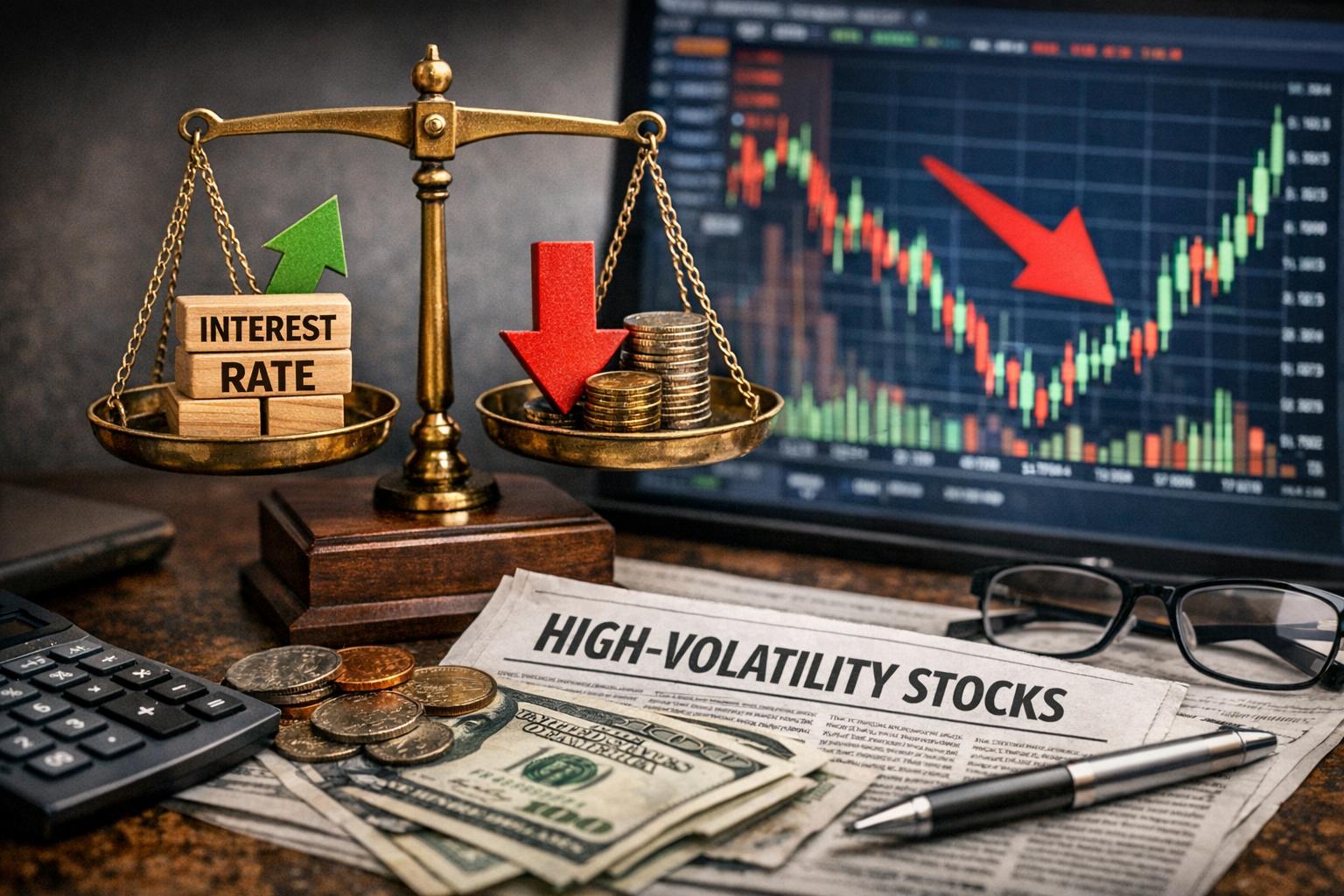
Understanding Interest Rate Changes
Interest rate changes don’t happen in a vacuum. When a central bank adjusts rates, it effectively changes the “price” of money across the economy. That price tag shows up everywhere: in what it costs banks to borrow, what companies pay to fund growth, and what consumers pay on loans and mortgages. It also shows up in the return people earn (or don’t earn) on savings and bonds. In practice, interest rate decisions often shape expectations months in advance, and then the market reacts as the reality settles in.
Most interest-rate moves originate from the central bank, which uses interest rates as a main tool of monetary policy. In simple terms, higher rates tend to slow down spending and borrowing, while lower rates do the opposite. Central banks usually balance two conflicting goals: keeping inflation from running too hot, and avoiding unnecessary damage to economic growth. Getting that balance wrong can turn “economic cooling” into a long and uncomfortable slowdown, so policy decisions typically come with careful communication and data-checking.
This article focuses on how interest rate changes ripple into asset prices, especially stock markets, and why high-volatility stocks can feel the effects more sharply than many investors expect.
How Central Banks Think About Rates
Central banks adjust interest rates with policy goals in mind. The two big ones are:
– Controlling inflation: When inflation rises too quickly, higher rates can reduce demand. Borrowing becomes more expensive, credit growth cools, and consumers and businesses tend to buy less on credit.
– Supporting economic activity: When the economy slows or risks slowing too much, lower rates can encourage borrowing and spending. Loans become cheaper, and investors may move money from low-yield assets into riskier investments.
A helpful way to think about it is this: interest rate changes alter incentives. When costs of borrowing rise, some projects that looked profitable at lower rates stop looking profitable. When borrowing costs fall, more projects clear that profitability threshold.
The Immediate Effects: Borrowing and Savings
Interest rates influence at least two everyday financial outcomes: debt costs and savings returns.
1) Consumer borrowing costs
For individuals, rate changes can show up through several channels. Variable-rate loans can reprice quickly. Even fixed-rate loans don’t escape interest rate gravity—they usually get priced at higher rates when new lending originates. Mortgages are the obvious example. When central bank rates rise, lenders often demand higher mortgage rates for new borrowers.
2) Credit availability and deal terms
It’s not only the interest rate itself. Higher rates often lead banks to tighten lending standards. That means some borrowers get worse terms or get turned away entirely, which reduces demand further.
3) Savings and bond yields
When rates rise, yields on savings accounts and many fixed-income products generally rise as well. That shifts investor preferences. If your savings are suddenly earning more, it becomes harder to justify higher-risk equity investments for some people—at least until equity valuations adjust.
The Business View: Costs of Capital
Businesses care about interest rates through their cost of capital—the mix of borrowing costs (debt) and returns required by investors (equity). If a company can’t raise money cheaply, expansion slows.
For many firms, interest rates affect:
– Project financing: Higher rates can make new facilities, R&D, or acquisitions less affordable.
– Refinancing risk: Companies with large amounts of debt may face higher interest expenses when they refinance.
– Consumer demand: Even if a firm’s borrowing costs stay manageable, higher rates can reduce consumer spending, which hits sales.
This is one reason markets tend to react quickly to interest rate expectations. Even before the central bank actually changes rates, investors reprice the likely future costs and profits.
Impact on Stock Market Dynamics
Stock markets are forward-looking. They don’t just react to what happened—they react to what investors believe will happen next. Interest rate changes matter because they affect valuations, especially through two common valuation approaches:
– Changes in expected future cash flows (via economic activity)
– Changes in the discount rate used to translate future cash flows into today’s value
When interest rates rise, borrowing costs rise for firms and consumer demand can cool. That can reduce revenue growth and increase financial drag, which makes earnings projections less optimistic. At the same time, the discount rate typically rises. Higher discount rates reduce the present value of future profits. With both effects working together, it’s not unusual to see stock valuations fall after rate increases, especially when earnings growth expectations don’t improve.
On the flip side, when interest rates fall, borrowing costs ease, capital spending becomes more attractive, and the economy usually gets a modest boost. Discount rates often fall too, which tends to support higher stock valuations.
Bonds vs. Stocks: The “Relative Return” Game
People often compare stocks to bonds, because interest rate changes alter bond yields directly. In many rate-increase cycles, bond yields become competitive enough that some investors reduce equity exposure. This shift can compress price-to-earning multiples, particularly for companies without consistent cash flow.
In more “rate-friendly” environments, equities tend to look more attractive relative to bonds. When bond yields drop, investors may lean into equities for return potential—sometimes at a faster pace than fundamentals alone would justify.
High-Volatility Stocks: An Overview
High-volatility stocks are shares that tend to experience large price swings over relatively short periods. That movement can be driven by real changes in business performance, shifting investor sentiment, or simply the market’s re-pricing of expectations.
High-volatility stocks often show up in sectors where future outcomes are harder to predict, such as technology, biotech, and other growth-oriented areas. These firms might not yet have stable earnings, or they might be dependent on outcomes that can take longer than investors hope. Because future cash flows are more uncertain, the market tends to “price uncertainty,” which often leads to larger swings.
In plain terms: high-volatility stocks can deliver impressive gains, but they can also punish patience quickly. If you’ve ever followed a stock that went up 20% in a week and down 25% the next, you’ll understand why investors treat this category with caution.
High-Volatility Stocks and the Interest Rate Connection
High-volatility stocks can be sensitive to interest rate changes for several reasons. It’s not always because the company’s underlying products suddenly change. Often, it’s because the market’s assumptions about future value shift.
When rates rise, the market typically becomes less tolerant of uncertainty. Investors may demand higher returns for riskier assets, and the discount rate used in valuation frameworks increases. For high-volatility stocks, which already live on the edge of prediction, that adjustment can hit harder.
When rates fall, the opposite can happen: risk appetite rises, discount rates fall, and investors may pay more for future potential—especially for companies that are still building revenue.
Why High-Volatility Stocks are Sensitive to Interest Rates
Several mechanisms explain why high-volatility stocks often react more sharply than “steady eddy” businesses.
1. Cost of Capital
When interest rates rise, the expense of financing increases. Even if a high-volatility company doesn’t rely on debt heavily today, it may still need external funding to scale. Many growth companies depend on capital markets for expansion, R&D, and working capital. If funding becomes more expensive, the company’s growth plan can slow, and investors often cut projections quickly.
This is the classic “future growth gets priced higher” problem. Investors may decide that the cost of reaching future targets has increased, so they mark down valuations.
2. Discounted Cash Flow Models (DCF)
A lot of valuation work—formal or informal—comes down to discounting expected future cash flows. Even when investors don’t calculate exactly like a spreadsheet, the underlying logic resembles one: future earnings are worth less when the discount rate rises.
When interest rates climb, the discount rate in DCF-like thinking rises. That reduces the present value of cash flows expected in later years. High-volatility companies often have cash flow streams that are more back-loaded in time (because profitability may be farther away). That makes them more sensitive to discount rate changes.
So even if a company executes fairly well, the valuation can still drop because the market’s valuation math changed.
3. Increased Uncertainty and “Risk-Off” Shifts
High-volatility stocks already carry uncertainty even when interest rates are stable. Rising rates can trigger a broader risk-off mood. Investors move toward safer assets like government bonds, or they favor stocks with steadier cash flows and less financing dependence.
When liquidity gets cautious, high-volatility stocks can feel it first. They often have more “moving parts” in terms of investor sentiment. If money is rotating toward safety, these stocks can see demand dry up faster than investors expect.
This is also why diversification matters. If all your exposure sits in rate-sensitive, high-volatility names, your portfolio becomes a single-factor bet on the interest rate story.
What It Looks Like in the Real World
Consider a scenario many investors lived through: a period of inflation concerns pushes rates higher. At first, the market argues it’s “temporary.” Then bond yields rise, and the equity market starts repricing. Growth stocks with weak or early-stage profitability can get hit more than mature companies, even if their long-term narratives remain intact.
That doesn’t mean the companies are suddenly worse—it means the market’s willingness to price long-dated profit projections at the same level has declined.
Another common pattern appears in tech and biotech during rate cuts. When rates fall, investors often chase growth stories again. Sometimes that helps fundamentally solid companies. Sometimes it helps companies whose only real edge is “being in the right sector at the right time.” Either way, volatility increases.
Strategies for Investors
If you hold high-volatility stocks, you don’t want to pretend you can control interest rate moves. You can’t. Rates follow macroeconomic conditions and central bank goals, not your portfolio preferences. What you can do is build a framework for decision-making.
1) Watch interest rate expectations, not just past moves
Markets often react to what rates might do next. Investors usually pay attention to central bank communications, inflation trends, and labor market indicators. Those inputs shape the path of future rates.
A rate hike already priced in can behave differently than a surprise hike. The practical advice: track the “expectations temperature,” not just the last headline.
2) Match risk level to your time horizon
High-volatility stocks can swing hard over weeks. If you need the money in a year or two, volatility isn’t your friend. If you can tolerate multi-year volatility, you’re more likely to ride out valuation swings tied to rate changes.
This is basic, but it’s worth repeating because people love optimism right up until they need cash.
3) Diversify across factors, not just company names
Diversification isn’t only about owning many stocks. It’s about avoiding that single-factor pileup. A portfolio full of high-growth, high-uncertainty names can still behave like one concentrated bet. Mixing sectors, valuation profiles, and financing models can reduce how strongly interest rate narratives dominate your returns.
4) Review balance sheet risk
Some high-volatility companies are more exposed than others. Pay attention to debt levels, refinancing needs, and liquidity. If a business has short-dated maturities or relies on frequent capital raises, rate pressure can become more than a valuation issue—it can become operational.
5) Consider valuation rather than letting stories run the show
Rate changes often affect valuation multiples. If a stock becomes expensive relative to its likely cash flows, even decent execution might not prevent drawdowns when discount rates rise. Conversely, if rates fall and a stock is reasonably priced, the upside can be more sustainable.
Further Reading
For those looking to deepen their understanding of how market dynamics and interest rate changes affect investments, websites like Investopedia offer detailed articles and expert commentary. These can help you connect the dots between monetary policy, bond yields, and equity valuation behavior without turning every article into a finance degree.
How to Read Interest Rate Moves Without Losing Your Mind
People often treat interest rate announcements as if they happen on a single day and then everything resets. In reality, markets build expectations gradually. If you want a calmer way to interpret interest-rate changes, focus on the three things markets react to most: the direction of the policy rate, the expected path over time, and how the economy looks relative to inflation and employment targets.
Policy Rate vs. Expectations: The “Already Priced In” Problem
Sometimes a central bank changes rates and the market barely moves. That happens when the move matches what investors already expected. Other times, a smaller change triggers a bigger reaction because the communication suggests future policy will differ from what markets had priced.
This is where the market gets noisy. People love the headline; investors care about the forward-looking guidance.
Inflation and Jobs: Why Two Indicators Can Be Louder Than One
Central banks typically respond to inflation because it’s the reason rates exist. But inflation doesn’t live alone. The labor market matters too. Strong employment can keep demand from cooling too fast, which can keep inflation sticky. Weak employment can reduce demand quickly, which may push central banks toward easing.
So when inflation drops but unemployment rises (or starts rising), the interest rate outlook can change fast. High-volatility stocks can react quickly because their valuations depend on assumptions about future growth, and those assumptions change under different economic conditions.
Bond Yields as a Translation Layer
If you want a quick “translation layer” between central bank policy and stock market valuation, watch bond yields. Bond yields capture much of the market’s expectation for future rates and inflation risk. When yields rise, discount rates effectively rise for equities too. When yields fall, the opposite tends to happen.
Bond yields aren’t the only input for stocks, but they’re often one of the faster indicators of changing financial conditions.
Valuation Sensitivity: Why Some Stocks Brace While Others Flinch
Not all stocks react the same way to interest rate changes. Part of that is business model, and part of it is investor expectations.
Stable Cash Flow vs. Future-Heavy Performance
A straightforward concept helps explain much of the difference. Stocks with stable, near-term cash flows tend to be less sensitive to discount rate changes because the market depends less on far-future outcomes.
High-volatility stocks often have performance expectations that stretch further out, which makes their valuation more sensitive to discounting. When the discount rate rises, far-future cash flows shrink in present value more than nearer cash flows.
Debt Structure and Financing Flexibility
Another factor is how a company handles debt. If a firm already has manageable leverage and long-term fixed-rate debt, the immediate impact of rate changes might be smaller. If the company has floating rate debt or frequent refinancing needs, rate changes can show up in expenses and cash flow sooner.
Investors notice. They don’t wait for an earnings report to figure out whether a refinancing wave is coming.
Competitive Dynamics Under Different Rate Regimes
Interest rate changes can shift competitive dynamics too. For example:
– In higher rate environments, businesses that depend on rapid expansion may struggle more.
– In lower rate environments, those businesses might gain share faster because financing becomes easier.
Markets anticipate these shifts. High-volatility stocks can respond quickly because their future growth narrative is often tied to financing conditions.
What Investors Usually Get Wrong About Rate Sensitivity
If you’ve been around markets long enough, you’ll notice a recurring pattern. People often confuse cause and effect or overreact to short-term moves.
Confusing a Rate Change With an Economic Signal
Sometimes central banks raise rates because inflation is running too hot. Other times rates rise because growth is strong and the central bank wants to avoid an overheating situation. The stock market reaction depends on which story investors believe. A “rate hike” alone doesn’t tell the whole picture.
Assuming All Growth Stocks Behave Like Each Other
Growth stocks aren’t a monolith. A profitable growth company with strong cash generation will usually react differently than a pre-profit biotech firm burning cash for clinical trials. Both can be “high volatility,” but their cash flow timelines and financing needs differ.
Overlooking Liquidity and Positioning
Even if the fundamental logic points toward one outcome, stock prices can overshoot. Liquidity dries up in certain market conditions, and crowded trades can unwind quickly. High-volatility stocks often experience larger swings partly because liquidity and positioning matter more when volatility is high.
Practical Examples: How Rate Changes Can Hit High-Volatility Stocks
Let’s make this less abstract. Below are scenarios investors often recognize.
Scenario A: Rate Hike Cycle
Imagine inflation stays stubborn, and the central bank raises rates. Bond yields rise. Discount rates increase. As a result, investors may stop paying huge multiples for profits expected later. High-volatility growth stocks can sell off even when their products look fine, because the valuation framework changed.
At the same time, some companies lose access to cheaper capital and slow hiring or expansion. That means the valuation move may become partially “real” later through weaker results, reinforcing the stock decline.
Scenario B: Rate Cuts During Slower Growth
Now imagine growth slows and inflation cools enough to justify cuts. Bond yields fall, discount rates decline, and investors reach for return again. High-volatility stocks often benefit because lower rates reduce the cost of capital and improve sentiment for risk assets.
But there’s a catch. If rate cuts happen because the economy is already in trouble, weaker demand can still hurt revenues. In that case, the stock may rally at first (because rates improved) but then struggle if earnings disappoint.
Scenario C: “Soft Landing” Communication
Sometimes the central bank signals stable policy or gradual change rather than dramatic shifts. Markets may interpret forward guidance as reducing uncertainty. High-volatility stocks tend to respond positively when uncertainty decreases because investors feel more comfortable pricing future growth.
This can happen even without an immediate rate move. Communication matters.
Building a Simple Interest-Rate Risk Framework
You don’t need a PhD to manage this kind of risk. You need a repeatable way to think through it.
Step 1: Identify your portfolio’s rate sensitivity
Ask what proportion of your holdings depend on external financing, long-dated profit expectations, or valuation multiples that can compress quickly. If most of your portfolio looks like that, you’re likely more exposed to interest rate changes, whether you meant to be or not.
Step 2: Track the “inputs” consistently
Instead of checking rates every day, pick a small set of indicators to monitor monthly or quarterly. Many investors use inflation data, labor market trends, central bank statements, and bond yields.
The trick is consistency. Markets move, but your process should stay steady.
Step 3: Decide in advance how you’ll react to volatility
High-volatility stocks can test your emotions. If you decide ahead of time whether you’ll hold through drawdowns, rebalance, or reduce exposure when valuations stretch, you reduce impulse decisions.
Investors tend to do best when they treat their strategy like it belongs to them, not to the daily news cycle.
Frequently Asked Questions
Do high-volatility stocks always fall when interest rates rise?
No. Markets may already price in expected rate hikes. Also, if a particular company’s fundamentals strongly improve, it can offset some rate pressure. Still, high-volatility stocks often get hit harder on average because valuation sensitivity and uncertainty tend to rise together.
Are high-volatility stocks “bad” investments?
Not automatically. High volatility can mean higher opportunity as well as higher risk. The real question is whether you can handle the swings and whether you have a plan for position sizing and risk management.
Should investors avoid high-volatility stocks during tightening cycles?
Some investors reduce exposure or increase diversification during tightening cycles, but avoidance isn’t the only approach. If you believe fundamentals will improve faster than the valuation headwind, you might still hold positions. Just don’t confuse a belief with a guarantee.
Final Thoughts
Interest rate changes move through the economy like weather moves through a region. It affects spending, pricing, funding, and confidence. Stock markets interpret those changes quickly through expectations and discount rates. High-volatility stocks, by virtue of uncertain or future-heavy performance, tend to feel that impact more strongly.
If you’re invested in these stocks, the goal isn’t to predict every rate decision. It’s to understand what rates do to valuations and funding costs, recognize why volatility can spike, and manage your risk accordingly. That approach won’t make market swings disappear—but it can keep you from making the worst possible trade: turning a long-term decision into a short-term panic.